

Disclosure: We participate in the Bulletproof Fitness Equipment affiliate program and may earn a commission from qualifying purchases made through links on this page.
The seat is easy to treat as a minor accessory. On the Isolator, it’s part of the exercise geometry — if the seat is too high, too low, unstable, or poorly supported, the lever position can be wrong even if the Isolator itself is installed correctly.
Product names and specifications in this guide come from Bulletproof’s current product pages.
The relevant components are the Isolator Seat/Pad, the Isolator Seat Spotter, the Isolator Kickstand Support Leg, and — for a different problem entirely — the Mini Isolator Stand.
The Isolator Seat/Pad
Bulletproof currently describes the Seat/Pad as a multi-purpose hybrid attachment that functions as both a seat and an upper-body support pad. The current product page lists it for preacher curls, leg extensions, leg curls, supported rows, seated work, and upper-body bracing.
It attaches through the Isolator’s Hex Port System to either the upper or lower port, and Bulletproof also documents compatibility with the Rack Hex Port Attachment, which extends use to dumbbell and barbell setups outside the Isolator.
Adjustable Angle
Bulletproof currently says the Seat/Pad uses a bearing-supported pivot system combined with a cam and pop-pin adjustment mechanism, which allows the angle to change for different movements. That matters more than it sounds — a preacher curl wants the pad supporting the upper arm at one angle, a leg extension needs the same pad positioning the pelvis and thigh relative to the Isolator pivot, and a supported row may turn it into a chest brace. One pad can cover all three only if its angle and mounting position can change.
Why Seat Stability Matters
The Isolator creates rotational force. During leg extensions, curls or other dynamic movements, the body pushes into the seat while the lever pushes against the limb. If the seat moves, the user loses repeatability, body position, joint alignment, and confidence under load. That’s why Bulletproof developed separate support options instead of relying only on the Seat/Pad connection itself.
The Isolator Seat Spotter
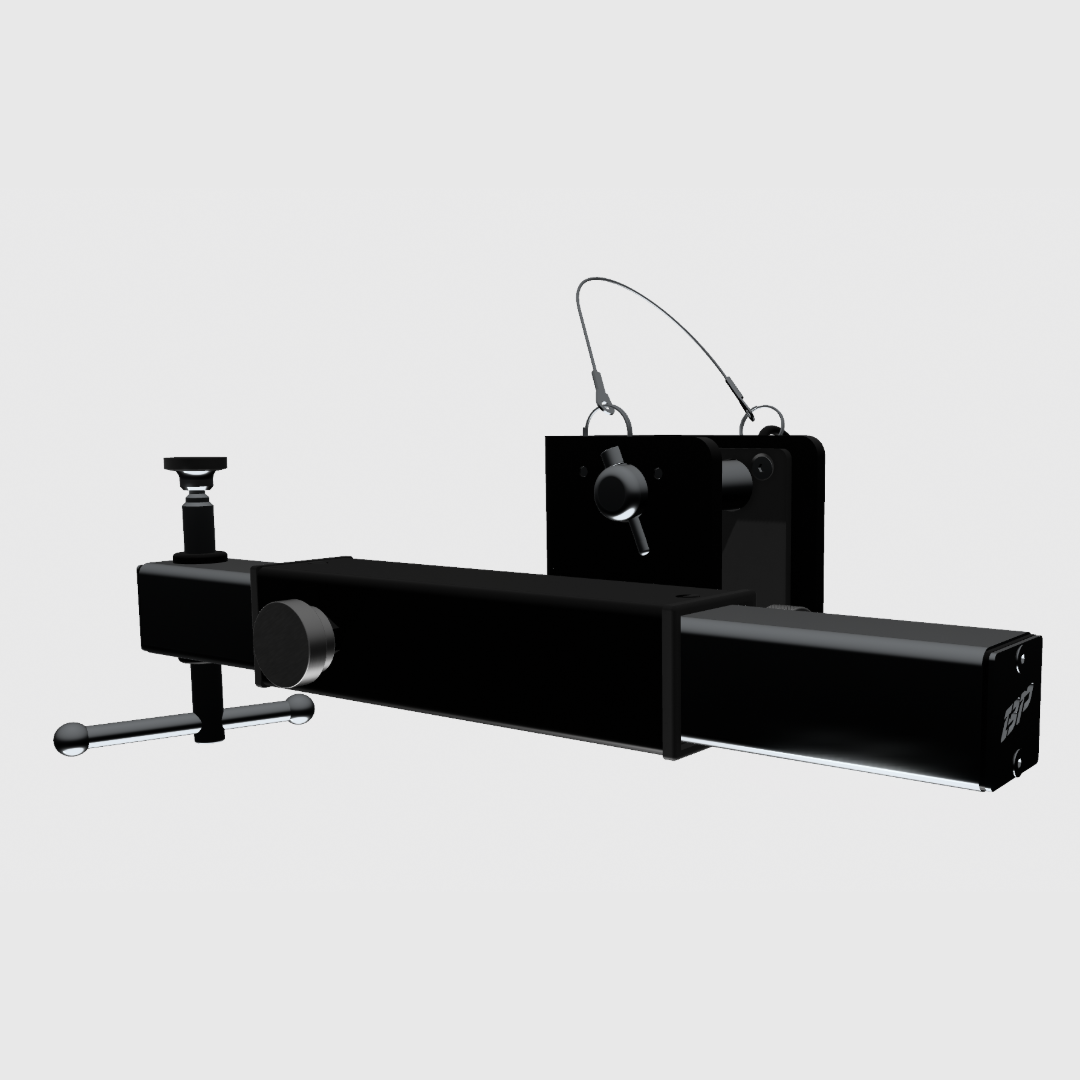
The Seat Spotter is the rack-mounted support option. Bulletproof currently describes it as a precision support system that eliminates seat wobble and locks the seat in place during dynamic movements.
It attaches to an outer rack upright using a C-channel mounting system with a protective spacer, secured with a thumb nut for quick tightening and an optional hitch pin — the two can be combined for maximum rigidity. Current size options are 3×3 / 1″ and 3×3 / 5/8″, and it’s a good example of why a rack builder needs to track upright size and pin/hole size separately.
Shop the Isolator Seat Spotter
When the Seat Spotter Is the Right Option
Use the Seat Spotter when the Isolator is mounted on a rack, an outer upright is available, maximum seat rigidity matters, and flat-position seated movements are common. Bulletproof currently says the Seat Spotter performs best in flat seat positions where its fixed, non-floating foot can make full contact. Some users adapt it to angled positions, but the foot itself doesn’t float — don’t market it as a universal articulating support for every seat angle. Its strongest documented use is a stable, flat-seat support.
The support arm also telescopes in and out to match rack depth, and height adjustment uses a vice-clamp-style threaded bolt with quick-adjust pin-style threading — the goal is to level the seat and create firm contact, adjusting the support to the seat rather than forcing the seat down onto an incorrectly positioned foot.
The Isolator Kickstand Support Leg
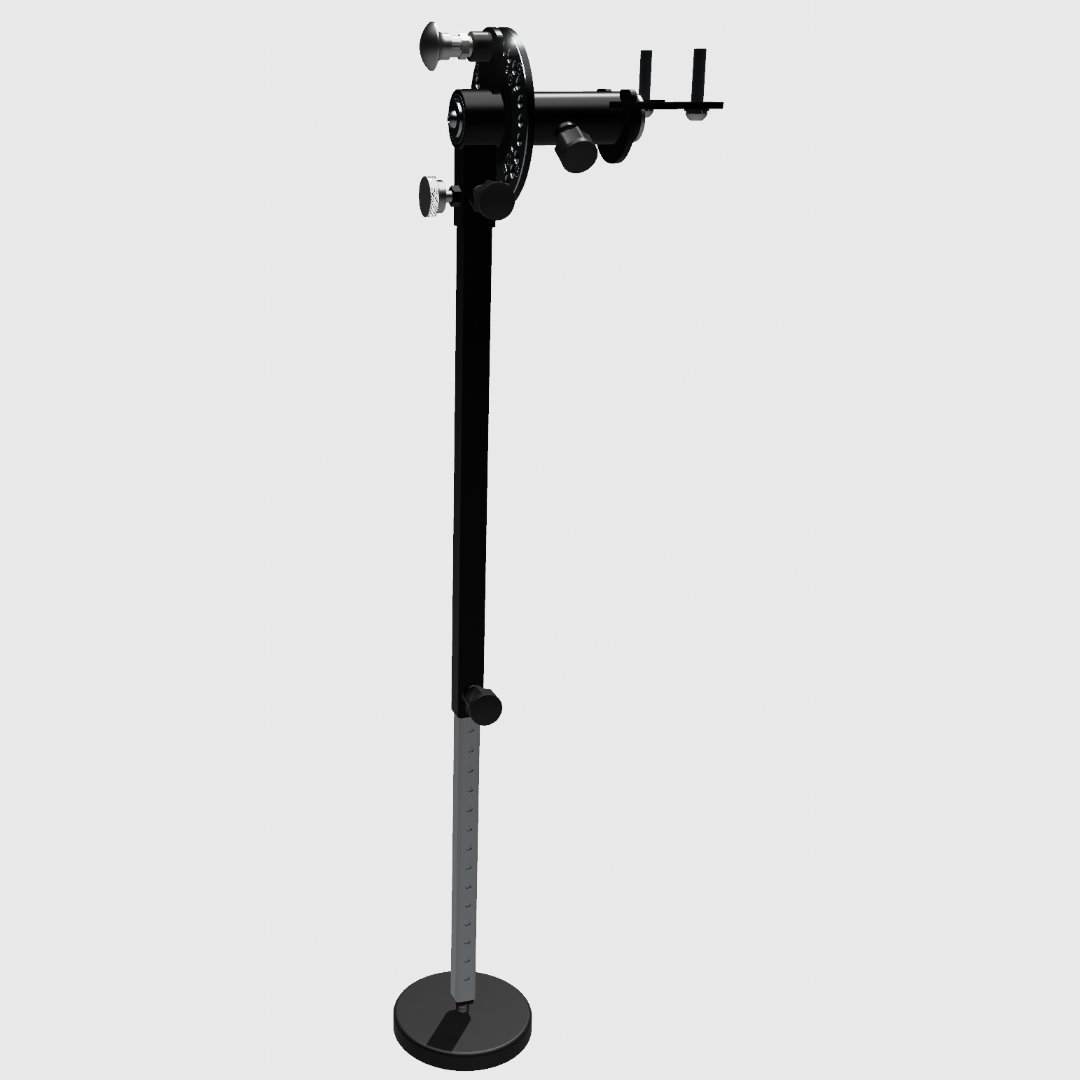
Bulletproof currently describes the Kickstand as a single-leg vertical support system with a telescopic leg, adjustable height, and a wide stable foot base. It’s built for the layouts where a Seat Spotter isn’t an option: a Solo Stand or Tri-Post Rack without an opposing upright, or any open-sided setup where no outer upright is present. For those layouts, Bulletproof positions it as the only support option — for a full rack with an upright directly across from the seat, the Seat Spotter is the better fit.
Shop the Isolator Kickstand Support Leg
Seat Spotter vs. Kickstand: The Decision Rule
Bulletproof’s current documentation gives a clear decision tree:
Do you have an outer upright next to the Isolator seat?
- Yes — the Seat Spotter is the manufacturer-preferred rigid, rack-mounted support.
- No — use the Kickstand for that layout.
That’s more useful than ranking one support as universally better. They solve the same instability problem for two different rack architectures.
A Third Option: The Mini Isolator Stand
If your main rack is constantly clogged with Isolator hardware, the seat-stability question can disappear entirely by moving the Isolator off the rack. Bulletproof’s Mini Isolator Stand is a compact, dedicated standalone structure for the Isolator — currently listed at 28″ wide x 43″ long x 53″ tall — built so you can leave the Isolator set up and move between exercises without rearranging your main rack.
This is a workflow upgrade more than a seat-stability fix: more permanent floor space in exchange for zero changeover time on the main rack. It’s worth considering if you use the Isolator constantly and the main-rack conflicts are the actual problem, rather than seat wobble itself.
Shop Mini Isolator Stand Packages
How This Affects Leg Extensions and Leg Curls
For a good leg-extension setup, seat height, knee position, the Isolator pivot, and leg-pad position all have to line up. The Seat/Pad creates the body position; the Seat Spotter or Kickstand keeps that position stable; the Lock-N-Float or other leg lever then supplies the movement interface. Those parts work as a system — a buyer who purchases only the leg attachment but has no stable way to position the torso may not get the result they expected.
Leg curls may require a different seat/pad angle, body brace, lever location or support position than extensions. Don’t assume the same seat/support geometry used for extensions is automatically optimal for curls.
Preacher Curls, Rows and Bracing
Bulletproof specifically documents the Seat/Pad for preacher curls — because the pad angle can change, it can support the upper arms in a curl-specific position. The same pad can also work through the Rack Hex Port Attachment in some non-Isolator setups, which is one of the strongest arguments for the pad itself: it isn’t locked into a single lower-body role.
Bulletproof also lists supported rows and upper-body bracing, which can make the Seat/Pad useful in ISO Arms or cable-related configurations where the torso benefits from support. That shouldn’t be generalized beyond documented compatible mounting systems — the pad still has to attach through the correct Hex Port architecture.
Who Should Use Which Support?
Seat Spotter — best for a rack-mounted Isolator with an outer upright available, flat seat positions, and maximum rigidity.
Kickstand — best for a Solo Stand, Tri-Post, or other standalone layout with no outer rack upright.
Mini Isolator Stand — best when the real problem is main-rack congestion rather than seat wobble itself.
Seat/Pad alone — the pad is the body-support attachment itself; whether you need additional support underneath it depends on the movement and layout.
Safety
A support system should eliminate movement, not introduce it. Before loading: confirm seat pin/hex engagement, confirm support contact, confirm the C-channel or kickstand hardware is seated, check that the support can’t slide, and check that the seat doesn’t rock. Don’t use improvised seat supports for heavy dynamic leg movements.
Final Take
The Isolator Seat/Pad should be treated as part of the training system, not a convenience accessory. The pad establishes body position; the support system stabilizes that position; the Isolator and lever attachment then provide the resistance path.
For rack-mounted setups with an outer upright, the Seat Spotter is Bulletproof’s rigid support option. For standalone layouts, the Kickstand is the documented alternative. If the actual problem is your main rack being permanently occupied by Isolator hardware, the Mini Isolator Stand solves a different problem entirely. That decision is simple once you know your rack architecture and what’s actually bothering you about the current setup.
Related: Bulletproof Fitness Equipment Ecosystem Guide · Bulletproof Lock-N-Float Guide · Rack Compatibility Builder