
Disclosure: We participate in the Bulletproof Fitness Equipment affiliate program and may earn a commission from qualifying purchases made through links on this page.
The Isolator Cam and Crossbow Cam are easy to lump together because both change how cable resistance reaches the Isolator. They are not the same tool.
I own the Crossbow Cam. The standard Isolator Cam comparison below is based on Bulletproof’s current published product page.
The simplest distinction is this: the Isolator Cam is the cleaner choice when you already have enough resistance and want controlled cable loading. The Crossbow Cam is the more aggressive option when your pulley setup reduces felt load and you want to recover more resistance or combine cable and plate loading.
Shop the Isolator Cam | Shop the Crossbow Cam
What the Standard Isolator Cam Is For
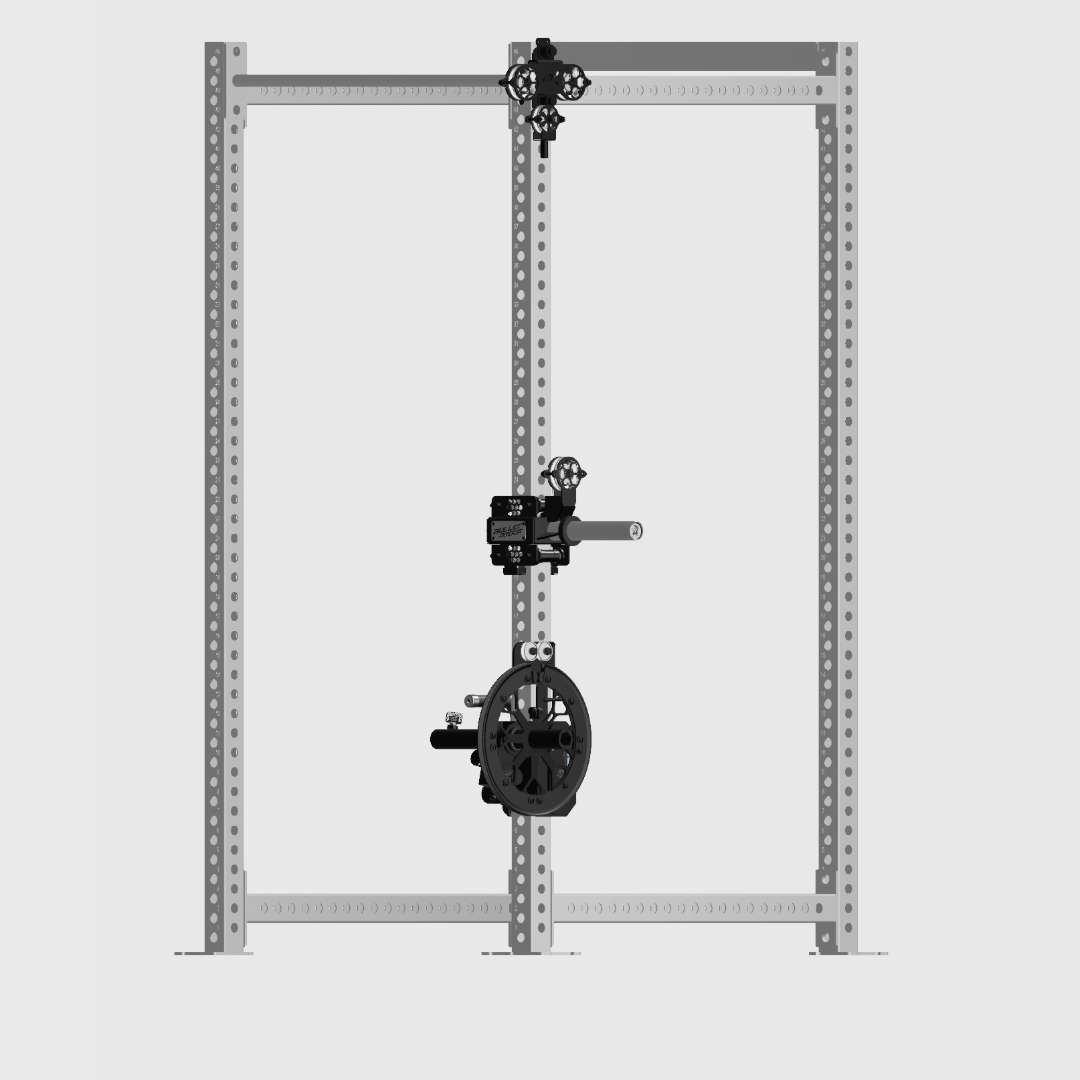
Bulletproof currently describes the Isolator Cam as a compact cam system for controlled isolation work. The manufacturer describes it as optimized for 1:1 cable systems and moderate-to-lighter resistance setups — that makes sense for movements where the goal isn’t to maximize absolute load but to make resistance more useful through the range of motion.
Bulletproof lists examples including:
- Preacher curls
- Triceps extensions
- Lateral raises
- Other controlled isolation work
The standard Cam also preserves the outer hex-port function, so it can remain installed without giving up compatible hex-port attachments like ISO Arms. Bulletproof’s current product page emphasizes that it’s designed to stay installed rather than becoming another part that has to be removed every time the Isolator is repositioned.
When the Standard Cam Makes the Most Sense
Choose it when:
- The cable system already gives you enough effective resistance
- You’re using a direct cable path
- The movements are relatively light
- You want the cam to remain installed
- Simplicity matters more than maximum leverage
If your cable setup already feels heavy enough, there’s little reason to use a more aggressive cam purely because it exists.
What the Crossbow Cam Is For
The Crossbow Cam solves the opposite problem. Bulletproof currently describes it as a higher-output cam designed to restore tension lost through cable-system mechanical advantage — specifically in cable systems where the handle-side force is reduced relative to the weight source.
In a common functional-trainer layout, the handle can feel like roughly half of the selected load before cam geometry is even considered. That can be great for long cable travel and small load jumps, but it can also become a problem when a strong user runs out of effective resistance. The Crossbow is designed for that situation.
Bulletproof also documents hybrid loading: cable resistance, plate resistance, or both at the same time through an outside weight-arm port. That makes it more than a bigger version of the Isolator Cam — it’s a more configurable resistance tool.
Crossbow Resistance-Profile Control
Bulletproof currently says the Crossbow Cam allows manual resistance-profile manipulation by changing the starting position. That means the user can change how the movement feels through the range:
- Lighter early and heavier later
- More even through the movement
- Heavier early and lighter later
This doesn’t mean the cam automatically “knows” the ideal strength curve — it means the geometry gives the user another variable to manipulate. That’s useful, but it also adds setup complexity. The Crossbow rewards someone willing to learn positions and cable geometry. The standard Cam is easier if you just want a repeatable setup.
Guide-Pulley Difference
The two cams also differ in how the guide-pulley setup is handled. Bulletproof currently says the Isolator Cam can use guide-pulley brackets mounted directly to the Isolator. For the Crossbow Cam, Bulletproof says the guide pulleys mount to the rack structure instead.
That matters in a compact gym because it affects where the cable runs, how much rack face is occupied, whether another attachment is in the way, and how easy it is to leave the setup assembled. The Crossbow is therefore more dependent on the surrounding rack architecture.
Cable + Plate Loading
This is one of the Crossbow’s clearest advantages. Bulletproof currently says the Crossbow can use cable resistance, plate resistance, or cable and plate resistance together. If your cable system is smooth but not heavy enough, adding plates at the lever can extend the usable range; if the cable system already provides enough resistance, the plates can be omitted. That flexibility is useful in a home gym because not every resistance source has the same maximum load.
The Pulley Ratio Calculator Connection
Before blaming the cam for a setup that feels too light, understand the cable system first. Use the Cable Pulley Ratio Calculator to estimate the effect of pulley mechanical advantage on handle-side resistance.
It can’t calculate the exact Crossbow or Isolator Cam torque curve — that requires cam radius, lever position, cable tangent, load point and joint geometry. The correct workflow is:
- Determine what the cable system itself is doing
- Estimate the approximate handle-side resistance before the cam
- Then treat cam geometry as another leverage layer
That prevents a common mistake: assuming the number on the stack or plates equals the force the user feels.
Which Cam Is Better for a Functional Trainer?
If the trainer uses a cable path that reduces handle-side force, the Crossbow is the option Bulletproof currently positions for recovering more resistance. If the trainer can provide a direct pull or already has enough effective load, the standard Isolator Cam is the simpler option. This is especially relevant for dual functional trainer setups, where long cable travel is often created by using mechanical advantage.
Which Cam Is Better for Small Muscle Groups?
The standard Isolator Cam is the more logical first choice. Bulletproof itself positions it around moderate-to-lighter isolation work. For curls, extensions, lateral-raise patterns and other movements where you don’t need huge absolute resistance, the simpler compact cam can make more sense. The Crossbow isn’t automatically “better” just because it can produce a more aggressive leverage effect — more leverage only helps when lack of resistance is actually the problem.
Which Cam Is Better for Heavier Rows, Presses and Extensions?
This is where the Crossbow becomes more relevant. Bulletproof specifically positions it for stronger users who are outgrowing normal cable loading and want more felt resistance. The hybrid cable-plus-plate option is also more useful here than it would be for a light lateral raise. If you’re building a Lock-N-Float leg station specifically, see the Lock-N-Float Guide for how seat support and resistance source fit together with cam choice.
Setup Complexity
Standard Isolator Cam
Lower complexity. Compact, can stay installed, and Bulletproof positions it as the easier path for controlled cable resistance.
Crossbow Cam
Higher complexity. You need to think about rack-mounted guide pulleys, cable path, start position, available plate loading, cable slack, and how the resistance profile changes when the setup changes.
That can be a benefit if you like tuning equipment. It can be annoying if you just want to perform a set.
My Ownership Context
I own the Crossbow Cam. That means it’s part of the Bulletproof equipment I’ve physically purchased, along with two VTS setups, the Launch Pad, the Isolator, ISO Arms, 360 Bearing Handles, 3D Handles and the Lock-N-Float lever arm.
Compatibility and intended-function statements in this article come from Bulletproof’s current product documentation.
Safety and Routing
Use the manufacturer’s documented cable path and guide-pulley locations. A cable that tracks off a cam, rubs a sharp edge or loads an improvised pulley mount can fail. Don’t treat a cam as a reason to exceed the rating of the underlying rack, pulley, cable, trolley or attachment — a more aggressive leverage setup can increase force on components even if the amount of weight you loaded didn’t change much.
Final Decision
Choose the standard Isolator Cam if:
- You already have enough resistance
- You’re using a direct cable setup
- You want lighter-to-moderate isolation work
- You value simplicity
- You want the cam to stay installed
Choose the Crossbow Cam if:
- Your cable system reduces handle-side resistance
- You’re running out of usable load
- You want to combine cable and plate resistance
- You want manual control over the resistance profile
- You’re comfortable with a more involved rack/pulley setup
The best cam is the one that fixes the actual problem in your resistance system.
Back to the main guide: Bulletproof Fitness Equipment Ecosystem Guide