How to Prevent Rust on Home Gym Equipment (Coastal Guide)

Home gym owner wiping a steel rack upright near the coast.

  Rust is the most preventable way a home gym loses value, and in humid basements, uninsulated garages and coastal homes it’s also the most common. A 3×3, 11-gauge rack can last decades or start pitting within a few years, and the difference is mostly moisture, salt, and how quickly chips in the finish get … Read more
Power Rack Hole Size: 5/8 vs 1 Inch Hardware Compatibility

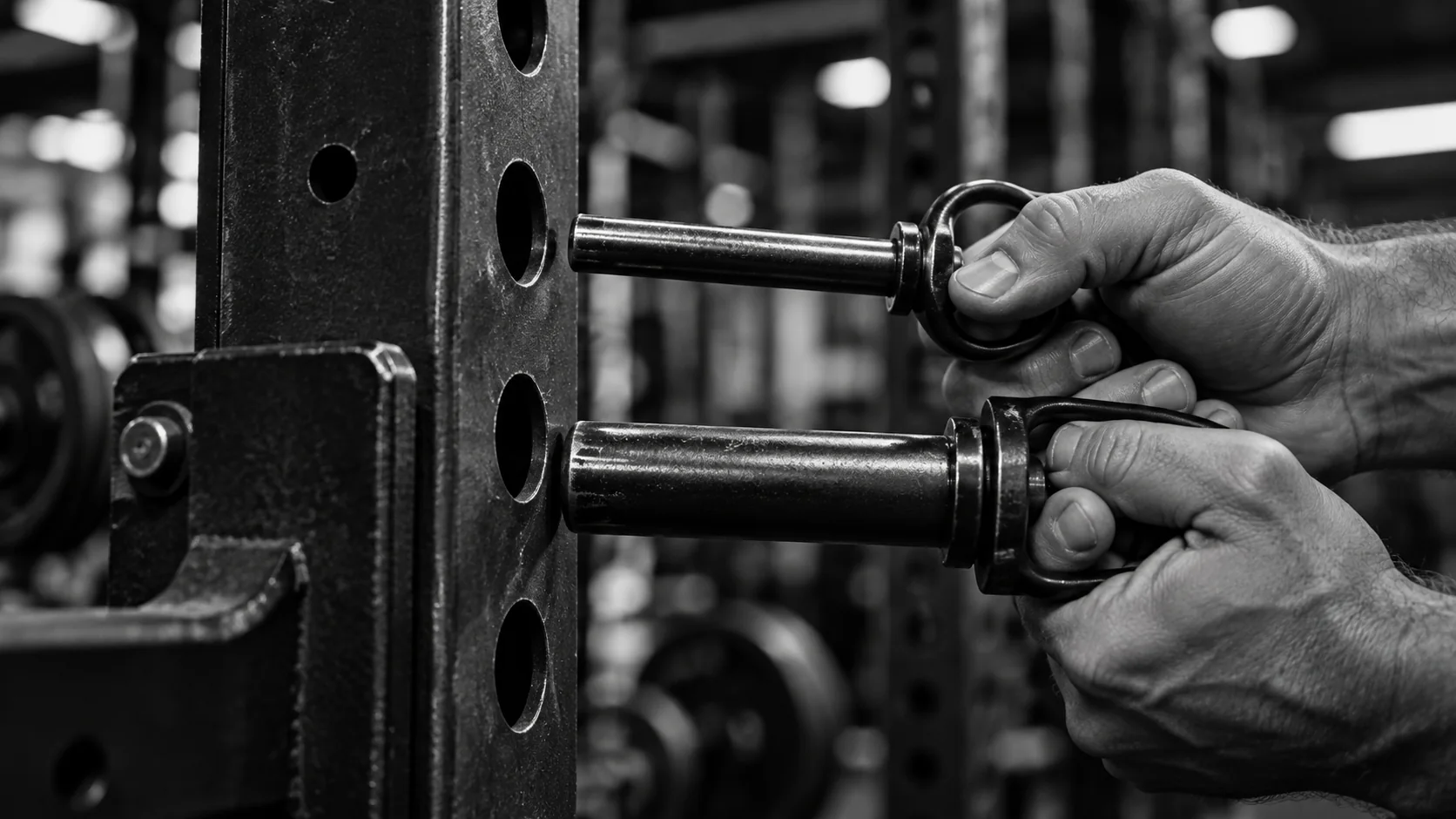
Two different attachment pins held beside holes in a power rack upright.

Short answer: hole size decides which attachments fit your rack, not how much weight it holds. Both 5/8-inch and 1-inch hardware are far stronger than anything a lifter can put through a J-cup. The real differences are fit, pin play, and which attachment catalogs you can buy from. This guide covers which racks use which … Read more

How to Set Up a Home Gym in a 10×10 Space

Compact home gym with a power rack and weights.

  A 100-square-foot training footprint is a real constraint, but it can be planned around. This guide covers how spatial limits interact with load-bearing hardware, movement planes, and storage, and lays out a practical framework for building a compact, well-equipped training space. A 10×10 room can house a genuinely capable strength training setup—a rack, a … Read more

11-Gauge vs 14-Gauge Steel Racks: Does It Matter?

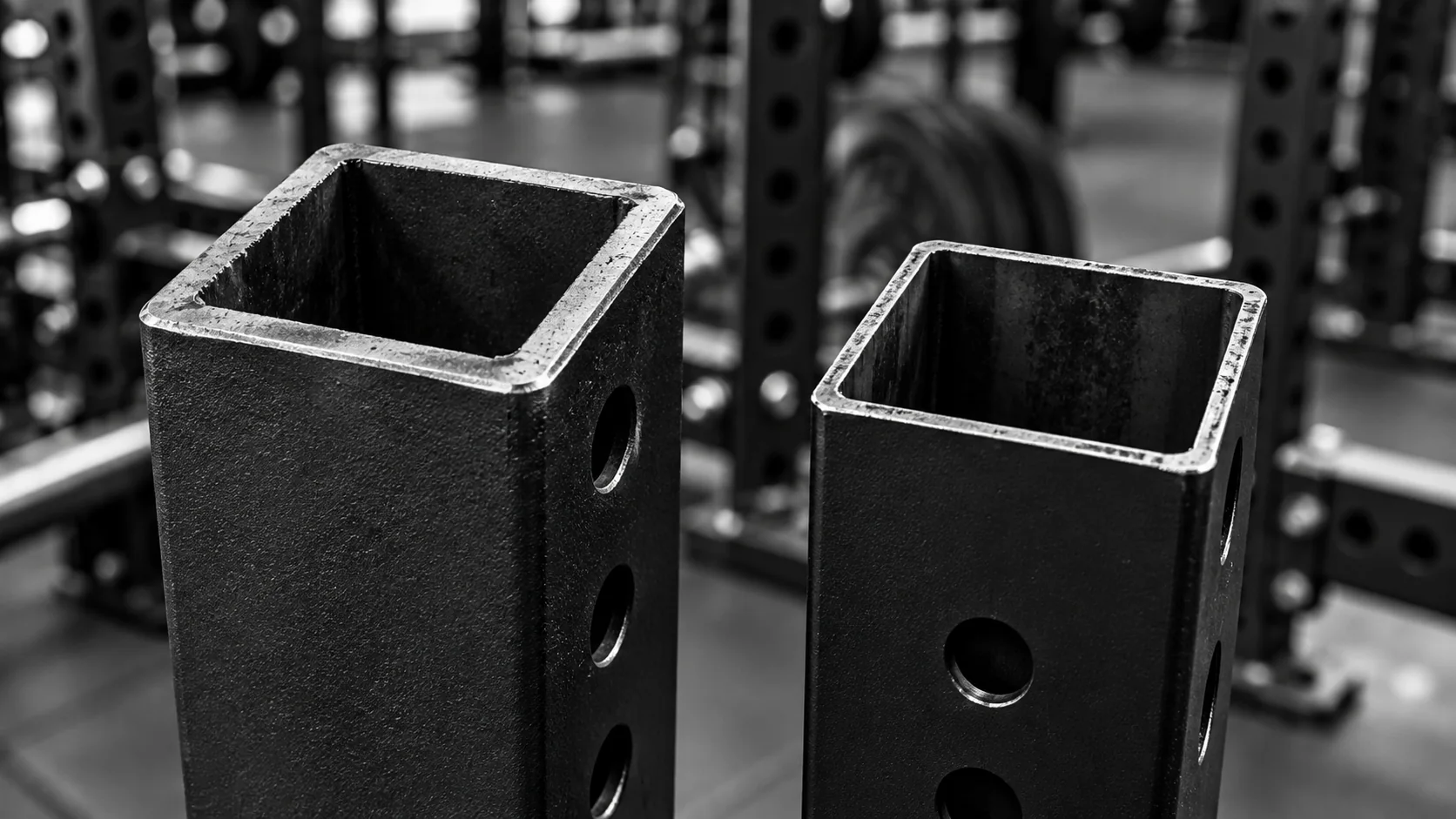
Close view of two hollow power rack uprights with visibly different wall thicknesses.

  Short answer: yes, for heavy barbell training it matters. At the same 3×3 upright size, an 11-gauge tube is about 53% stiffer in bending than a 14-gauge tube, so under the same load the 14-gauge upright flexes roughly 1.5 times as far. But gauge is only half the story. The outside dimensions of the … Read more

Why 3×3 Steel Racks Are the Standard for Serious Training

Power rack in a home training space.

  3×3-inch uprights became the standard for serious racks for two plain reasons: they’re stiff in every direction, and they’re the size most attachments are built for. You’ll find them in college weight rooms, commercial gyms and well-equipped garages alike. The engineering case is real and easy to put numbers on. Some of the claims … Read more