
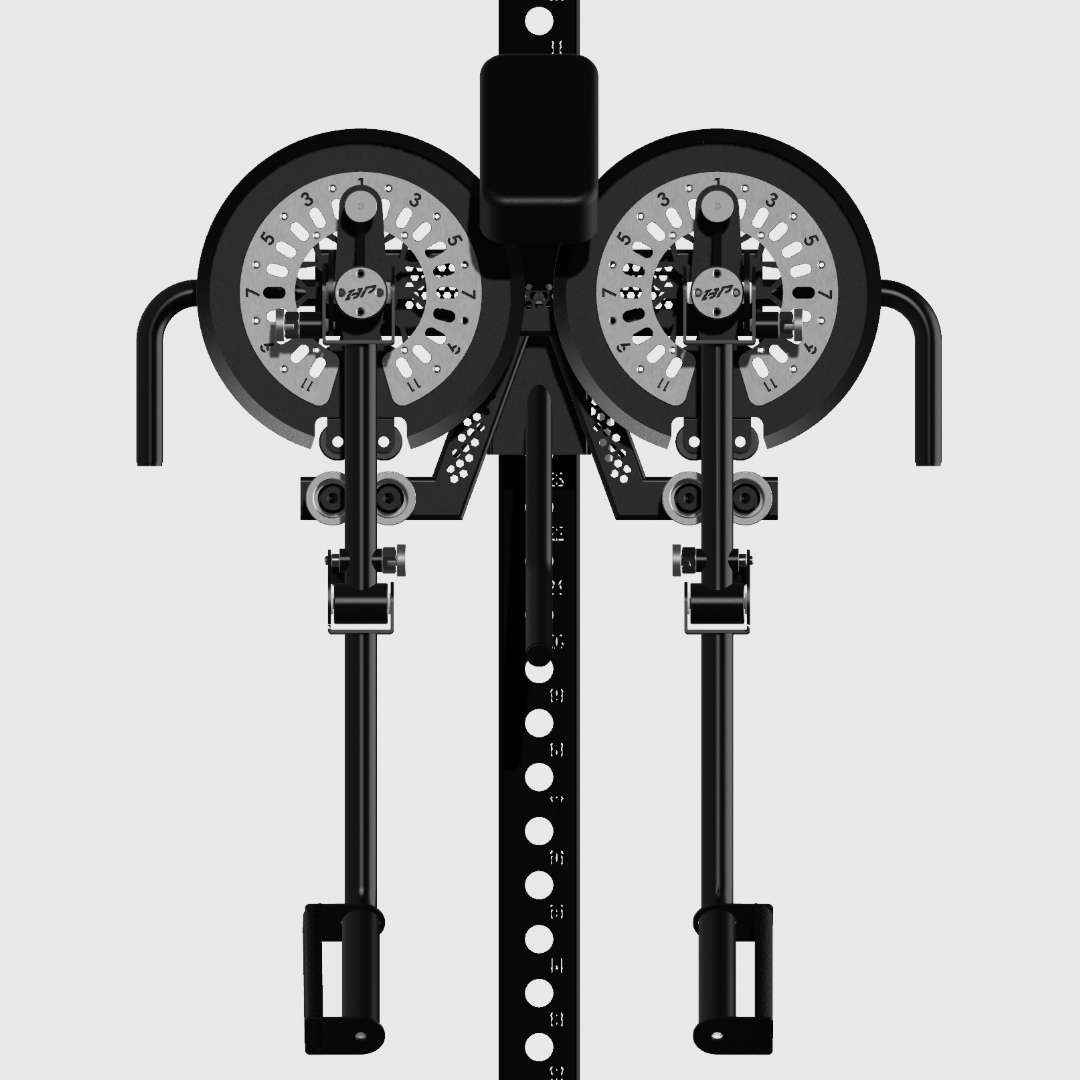
Disclosure: We participate in the Bulletproof Fitness Equipment affiliate program and may earn a commission from qualifying purchases made through links on this page.
The easiest way to overspend on modular gym equipment is to buy accessories because they’re interesting instead of because they solve a problem. Bulletproof has enough attachments that almost any owner can keep adding pieces indefinitely.
A better rule: buy the next attachment that adds a movement you can’t already perform well. Don’t buy the next attachment simply because it’s compatible.
This guide organizes the ecosystem by missing training function.
Start with the Bulletproof Fitness Equipment Ecosystem Guide if you haven’t already.
Start With the Base You Already Own
The correct next attachment depends on your core platform. If you own VTS, your best expansions are different from someone who owns only the Isolator. If you own the Isolator, handles and cable hardware may matter less than seat support, pads, cams and lever arms. If you own both, the question becomes which movement category is still missing. Not sure which VTS tier fits in the first place? See VTS vs VTS Lite vs VTS Lite HOME.
The major Bulletproof foundations are VTS/VTS Lite, Isolator, ISO Arms, VBS, Direct Flight, and compatible rack/stand infrastructure. From there, think in movement gaps.
If You’re Missing Leg Pressing
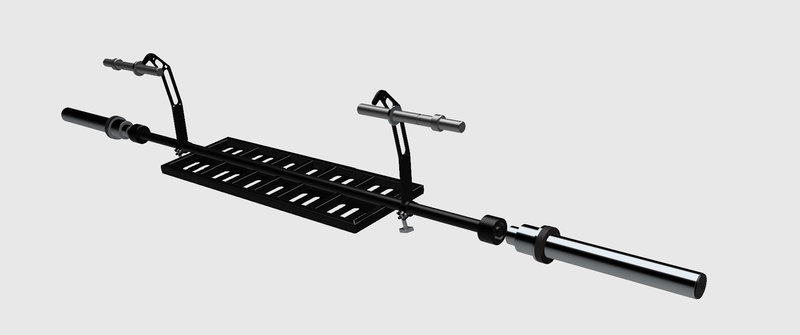
Consider the VTS Launch Pad. It adds a dedicated footplate to VTS or VTS Lite and opens up leg-press setups, calf work, and padded-cushion variations. (On VTS Lite, Bulletproof says the weight horns screw directly into the Launch Pad.) This is one of the highest-impact VTS accessories because it adds a machine category rather than merely changing a grip.
Best for: a VTS/VTS Lite owner with no dedicated leg press. Skip it if: you already have a leg press you prefer or don’t want another setup step.
See: Bulletproof VTS Launch Pad Guide
If You’re Missing Leg Extensions and Curls
Consider the Isolator plus the Lock-N-Float leg system. The leg pads attach to the Lock-N-Float Center Mount Lever Arm, which can also take Bulletproof’s Curl/Dip Add-On for preacher curls and machine-style dips. Bulletproof currently documents leg extensions, seated and prone leg curls, a synchronized Lock Mode, and an independent Float Mode.
Best for: an Isolator owner who wants a more purpose-built knee-extension/curl station. Skip it if: you already own a dedicated selectorized leg-extension/curl machine and value instant setup more than space savings.
See: Bulletproof Lock-N-Float Guide
If Your Isolator Seat Moves Too Much
Fix support before buying another movement attachment. Consider the Isolator Seat Spotter if an outer rack upright is available, the Kickstand-style support if it isn’t, or the Mini Isolator Stand if you want to move the Isolator off the main rack entirely. This can be a better upgrade than adding another lever arm, because unstable body support affects every movement that uses the seat.
See: Bulletproof Isolator Seat Support Guide
If You’re Missing Cable Exercises
For VTS/VTS Lite owners, the High/Low Pulley System is one of the most important expansions. A single unit provides one cable side; a left-plus-right setup around independent VTS/VTS Lite trolleys can create a dual-column rack-based cable station. Bulletproof currently documents cable curls, face pulls, seated rows, standing rows, cable presses, and rotational/custom-angle work through it.
Best for: someone who wants cable variety without adding another full functional-trainer frame.
Important: VTS Lite HOME is not the same expansion platform — Bulletproof’s HOME product page confirms it skips hex port receivers entirely, which rules out the Hi-Lo cable path that standard VTS and VTS Lite support.
See: Turn Your Rack Into a Dual Functional Trainer
If Your Cable System Feels Too Light
Check the cable mechanics first. Don’t automatically buy a cam — use the Cable Pulley Ratio Calculator.
If the pulley route reduces handle-side resistance enough that you’re running out of usable load on the Isolator, the Crossbow Cam becomes relevant — Bulletproof currently positions it for reduced-force cable systems and supports hybrid cable-plus-plate loading. If your cable source already provides enough resistance and you mainly want controlled isolation work, the standard Isolator Cam is the simpler choice.
See: Isolator Cam vs Crossbow Cam
If Your VTS Starting Weight Is Too Heavy
Consider Lift Assist before replacing the platform. Bulletproof currently documents Lift Assist for VTS, Isolator and VBS — the system uses an adjustable spring counterbalance to offset built-in equipment weight.
For VTS, Bulletproof currently describes pairing two units to get a “weightless” feel on the trolleys. For the Isolator, the manufacturer documents one unit counterbalancing the carriage, which weighs approximately 45 pounds. For VBS, Bulletproof says a single supported configuration can reduce the 83-pound starting resistance by approximately 30 pounds.
Best for: lighter isolation work, smaller users, or anyone who dislikes the unloaded mass of the base equipment.
If You Want More Handle Freedom
Don’t choose by appearance. Choose by interface.
- Full VTS barbell latch: ISO Handles Attachment, Swivel Handles
- VTS Hexport: Hexport ISO Handles
- ISO Arms / selected VTS dual-hex: Adjustable Handles, Row Handles
- Articulated VTS / ISO Arms use: 3D Handles
- VTS bearing/telescopic system: 360 Bearing Handles
The best handle upgrade depends on the motion you want: fixed independent handles, free rotation, articulation, width adjustment, or rowing geometry.
See: Bulletproof Handle Compatibility Guide
If You Want a Pec-Deck / Rear-Delt Style Movement
Consider Direct Flight after your resistance source is solved. It isn’t the first Bulletproof purchase to make for most users — it makes more sense once you already have compatible 3×3 mounting, a documented resistance source, cable routing, and room in front of the rack. From there it adds a distinct movement family: fly, rear delt, standing lateral raises, and other documented cam-driven patterns.
Best for: someone whose rack already handles the basics and who wants more dedicated machine-style upper-body movement.
If You Want a Dedicated Belt Squat
Consider VBS if belt squatting is important enough to justify a separate structural station. VBS isn’t just another Isolator attachment — it’s its own belt-squat platform. That makes it a later-stage purchase for someone who trains belt squats regularly, wants a dedicated movement path, has the wall/installation space, and doesn’t want to reconfigure the main rack every time. If belt squats are occasional, another existing rack/cable solution may be enough.
If Your Main Rack Is Always Clogged With Isolator Parts
Consider a dedicated stand before buying more attachments. The Mini Isolator Stand gives the Isolator a compact standalone structure — currently listed at 28″ wide x 43″ long x 53″ tall. That shifts the tradeoff: more permanent floor space, but less changeover time on the main rack. This is a workflow upgrade more than an exercise upgrade, and it can be more valuable than adding another movement if you already use the Isolator constantly.
Shop Mini Isolator Stand Packages
If Your Rack Hardware Doesn’t Match
Don’t improvise. Bulletproof currently offers a mix of 1-inch hardware, 5/8-inch hardware, universal configurations, and adapter-supported Isolator pin sizes. Use the Rack Compatibility Builder to check whether a product is a native fit, adapter-supported, a calculated fit, needs checking, or incompatible. Don’t treat “3×3 rack” as enough information — hole size, side holes, inside width, bay width and attachment interface can all matter.
A Simple Buying Order
For a new VTS owner: train with the base VTS, add the movement category you miss most, add support/ergonomic parts that make that movement repeatable, then add specialty handles later. Example: VTS → Launch Pad → High/Low → handles.
For a new Isolator owner: decide which rotary movement matters most, build the seat/support around that movement, add the appropriate lever/pads, solve the resistance source, and add cams only when the cable mechanics justify them. Example: Isolator → seat/support → Lock-N-Float leg pads → cable/trolley → cam if needed.
For someone who owns both: buy whichever attachment fills a movement category neither base platform currently covers well.
The “Don’t Buy It Yet” Test
Before ordering any Bulletproof attachment, answer four questions:
- What exact exercise or movement category does this add?
- What do I already own that does the same job?
- What additional hardware does it require?
- Will I actually leave it accessible enough to use?
If those answers are vague, wait. Modular equipment is especially easy to collect instead of use.
The Best Next Attachment Is Personal
There’s no universal “best Bulletproof attachment.” A Launch Pad can be transformational for someone with no leg press and useless to someone with a dedicated commercial unit. High/Low can unlock half a training program for one rack owner and be redundant for someone who already owns a dual stack. Lock-N-Float can make the Isolator far more useful for a lifter focused on knee flexion/extension and add little for someone who doesn’t care about those movements.
Final Take
Choose the next Bulletproof attachment by the training gap it closes.
- Need leg pressing? Launch Pad.
- Need leg extensions/curls? Lock-N-Float leg system.
- Need preacher curls or loaded dips? The Curl/Dip Add-On on the same Lock-N-Float arm.
- Need cable work? High/Low.
- Need more cable resistance? Check the ratio first, then consider the Crossbow Cam.
- Need lighter starting resistance? Lift Assist.
- Need better seat stability? Seat Spotter or Kickstand.
- Need a permanent Isolator station? Mini Isolator Stand.
- Need more handle freedom? Choose by interface and movement.
That approach keeps the ecosystem useful instead of turning it into a collection of parts.
Back to the main guide: Bulletproof Fitness Equipment Ecosystem Guide