
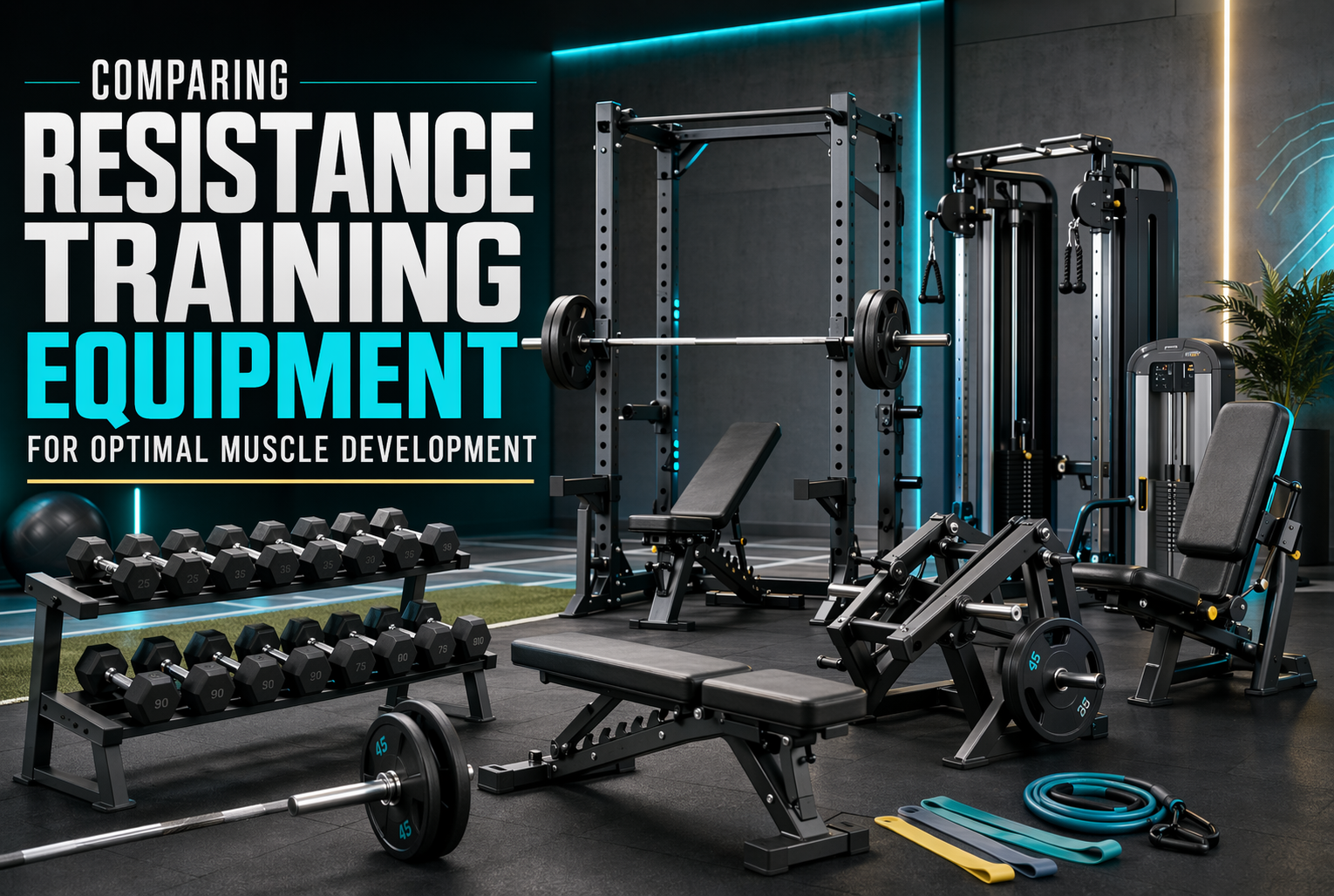
Quick Summary: The best resistance training equipment depends on your goals, space, and experience. For muscle growth, a mix of machines and free weights works well, with focus on enough volume and progression. Machines offer stability and easier targeting, while free weights develop coordination and long-term strength. Ultimately, choose what you will use consistently and safely to keep progressing.
The best Resistance Training Equipment is the gear you will use hard, load over time, and fit into your space. Resistance Training Equipment choices shape overload, stability, and fatigue. Serious lifters often compare Muscle Development Equipment and Strength Training Hardware without a clear framework. This Resistance Training Equipment guide compares the main options by growth, safety, efficiency, and real-world coaching use.
Resistance Training Equipment at a Glance
| Free weights | Machines and selectorized equipment | Cable and pulley systems | Racks, benches, and attachments | |
|---|---|---|---|---|
| Pricing | Low to moderate | Moderate to high | Moderate to high | Moderate |
| Space requirements | Moderate to high | Moderate to high | Moderate | Moderate |
| Muscle development focus | High versatility and compound overload | High isolation and fatigue control | Balanced hypertrophy and accessory work | Foundational compound training |
| Progression potential | Excellent | Very good | Very good | Excellent |
| Best for | General hypertrophy and strength | Targeted muscle growth | Accessory volume and movement variety | Heavy barbell training and progression |
Meet the Contenders
Free weights
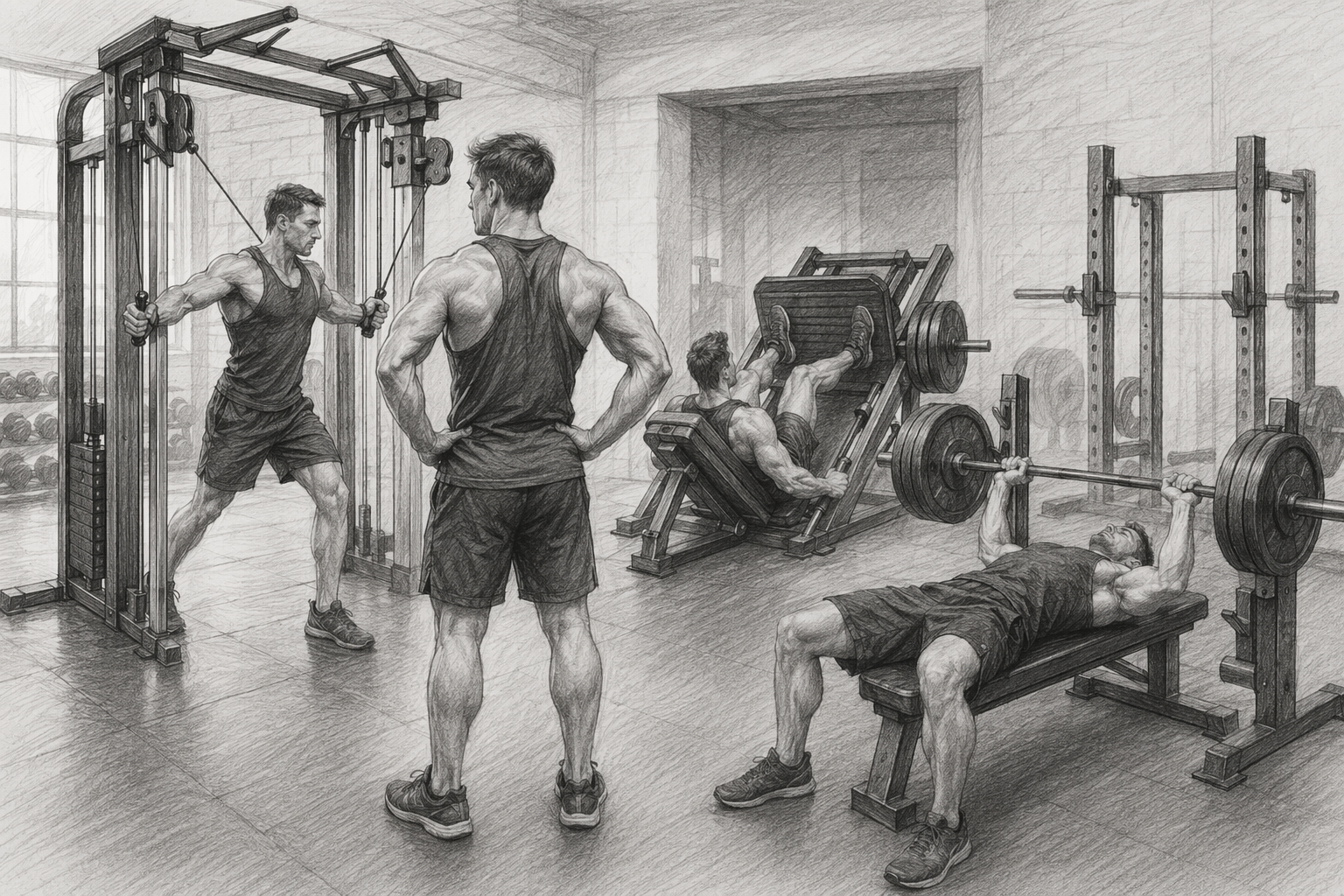
Free weights cover barbells, dumbbells, kettlebells, and plates. They fit lifters who want broad exercise choice, strong overload, and clear long-term progression. In this comparison, they set the baseline for versatile hypertrophy and strength work.
Machines and selectorized equipment
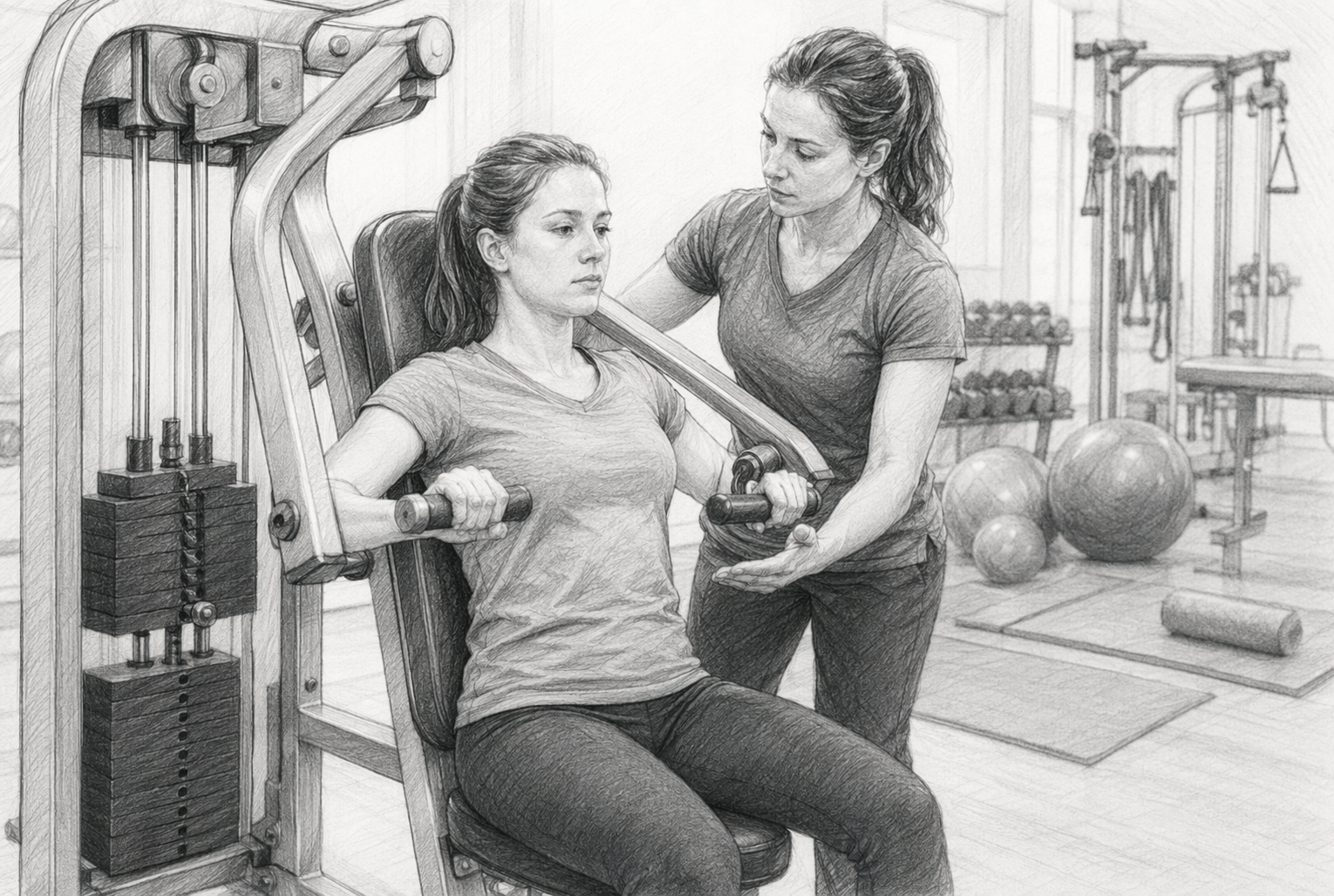
Machines use guided paths and fixed setups to make training stable and repeatable. They suit lifters, coaches, and rehab settings that want targeted muscle work with better fatigue control and easier setup.
Cable and pulley systems
Cable systems let you train through many angles with steady tension. They work best for accessory volume, movement variety, and lifters who want smoother setup changes between exercises.
Racks, benches, and attachments
These pieces anchor heavy barbell training and add safety, support, and exercise options. They suit serious trainees who want foundational compound work with room to progress for years.
How Each Equipment Type Drives Muscle Growth
Machines drive growth by cutting balance demands, so you can push sets closer to failure and keep tension on one muscle. Free weights give more freedom and train stabilizers, but some effort goes to control. Both can build size if you apply progressive overload.
Use machines when you want target-muscle fatigue. Use free weights when you want more skill, coordination, and loading options.
- Machines: higher stability, easier isolation
- Free weights: more freedom, more stabilizer work
- Cables: steady tension across many angles
Resistance curve and range of motion change how hard an exercise feels at each joint angle. Recent review data suggests growth often improves when exercises load the muscle well in longer positions, not just at peak squeeze according to this 2026 review.
- Match equipment to the muscle’s hardest useful range.
- Favor deep, controlled reps when joints allow.
- Use partials as a tool, not your default.
Which Equipment Works Best for Different Training Goals?
- Pure hypertrophy: Machines and cables usually win on ease, stability, and target loading. A 2023 review found no clear hypertrophy edge for free weights over machines in direct comparisons, so pick what lets you train hard with full control and enough volume systematic review.
-
Strength carryover and athletic development: Barbells, dumbbells, and Olympic lift variations fit best. Free weights build force with more balance and coordination demands, and current ACSM guidance supports heavy loads for strength and fast lifts with moderate loads for power ACSM Position Stand.
-
Home gyms and small spaces: Adjustable dumbbells, bands, a bench, and a pull-up bar give the most range per square foot. Add one cable tower if budget allows. Skip big single-use machines unless one movement really matters to you.
Safety, Progression, and Programming Efficiency
When guided equipment improves training quality
Machines help when skill, fatigue, or rehab limits control. ACSM notes equipment type does not consistently change hypertrophy outcomes, so guided paths can improve effort and setup speed while lowering technical drift in its 2026 position stand.
When free weights create a better long-term base
Free weights build coordination, bracing, and load ownership. A 2023 meta-analysis found no direct hypertrophy difference versus machines, but strength gains stayed more specific to the tool trained in this review.
Pick the tool that lets you add load, reps, or control safely each week.
Which Should You Choose for Muscle Development?
Best default choice for most trainees
Choose a mix of machines and free weights. That is the best default for muscle growth. A 2023 meta-analysis found no clear hypertrophy difference between free weights and machines in direct comparisons for muscle hypertrophy. For programming, prioritize enough hard sets each week, since a large review found hypertrophy improves most with higher training volume for resistance training prescription.
Start with stable machine work for effort and add free weights for skill, coordination, and long-term strength.
Choose equipment that fits your body and goals. Get science-based hardware guidance and smarter setup help from Hypertrophy Protocol.
Frequently Asked Questions
Q1: What are the differences in muscle development between pyramid, super set, and compound resistance training modalities?
Pyramids build skill and volume. Supersets raise density and fatigue. Compound methods train many joints at once, so they load more tissue, but isolation work still helps bring up weak muscles.
Q2: How does resistance training set configuration influence muscle hypertrophy and strength gains in the US?
Set setup changes effort, rest, and total hard reps. Longer rests help strength. Shorter rests boost density. Most lifters grow best with enough weekly hard sets, solid load progression, and repeatable exercise execution.
Q3: What are the effects of resistance training modalities on core muscle biomechanics and functional stability?
Free weights demand more bracing and balance. Machines reduce stability demand and let target muscles work harder. Cables sit in the middle. Use both if you want strong trunk function and better local muscle stimulus.
Conclusion
Best equipment is the one that lets you train hard, safely, and progress. The 2026 ACSM position stand found equipment type mattered less than volume, range, and consistency.