

Mechanical tension is the force a muscle fiber generates and experiences during a loaded contraction, and it is the best-supported primary driver of resistance-training hypertrophy. For decades, textbooks presented three roughly equal mechanisms — mechanical tension, muscle damage, and metabolic stress — as the drivers of muscle growth. That framing came from Brad Schoenfeld’s widely cited 2010 review in the Journal of Strength and Conditioning Research, which laid out all three as plausible contributors (Schoenfeld, 2010, doi:10.1519/JSC.0b013e3181e840f3). Since then, more controlled comparisons have narrowed the picture: when mechanical tension is held equal between two protocols, adding more metabolic stress or more muscle damage does not reliably add more growth. Tension is doing most of the work.
This guide covers what mechanical tension is at the cell level, what the evidence does and doesn’t support about the older “three-mechanism” model, and what that means for programming: load selection, proximity to failure, volume, and range of motion.
What mechanical tension actually is
Mechanical tension refers to the force generated within and transmitted through a muscle fiber during contraction against resistance, concentrated at the sarcomere — the basic contractile unit of muscle. It has two components: active tension, produced by actin-myosin cross-bridge cycling during voluntary contraction, and passive tension, produced by structural proteins such as titin when the muscle is stretched under load.
Together these forces are converted into a growth signal through a process called mechanotransduction. A 2019 review by Wackerhage and colleagues in the Journal of Applied Physiology describes mechanical signals as the leading candidate “hypertrophy stimulus,” detected at the cell membrane and cytoskeleton and cascading into the mTORC1 signaling pathway that drives muscle protein synthesis. The exact sensing mechanism is still being worked out, but the mechanical signal itself is the best-supported starting point of the chain (Wackerhage et al., 2019, doi:10.1152/japplphysiol.00685.2018).
What the evidence says about metabolic stress and muscle damage
The “pump” — the buildup of metabolites and fluid in a muscle during high-rep, short-rest training — was once thought to independently drive growth through cell swelling and metabolite signaling. When training protocols are designed so that mechanical tension is matched between groups, adding deliberate metabolic stress on top has not reliably produced extra hypertrophy in controlled comparisons. The pump is a real physiological event; it just isn’t good evidence, on its own, that a set was productive.
Muscle damage tells a similar story: it reliably occurs with novel or eccentric-heavy training, but the size of the damage response doesn’t track with the size of the hypertrophic response, and damage is not considered necessary for growth. Both metabolic stress and muscle damage may still play a supporting role, but the current weight of evidence puts mechanical tension well out in front as the dominant driver.
Acute hormone spikes don’t explain hypertrophy differences
A once-popular idea held that training should be designed to “spike” testosterone or growth hormone — big compound lifts, moderate rest, high volume — because those acute hormonal bumps drive growth. Direct testing doesn’t support it. In a cohort of 56 young men, West and Phillips found no significant correlation between acute post-exercise growth hormone, free testosterone, or IGF-1 responses and gains in lean mass or leg press strength after resistance training (West & Phillips, 2011, doi:10.1007/s00421-011-2246-z). Programming around a bigger hormonal spike isn’t supported by that data — mechanical tension applied consistently is the more defensible target.
Load selection and motor unit recruitment
The Henneman size principle describes motor units being recruited from smallest (low-threshold, Type I) to largest (high-threshold, Type II, the fibers with the most growth potential). Two paths recruit those high-threshold units: heavy loads (roughly 80%+ of 1RM) that demand it immediately, or lighter loads taken close to failure, where fatigue forces the nervous system to keep recruiting until the full motor unit pool is engaged.
This is the mechanistic backing for a now well-replicated finding: load itself doesn’t determine hypertrophy nearly as much as how close to failure the set is taken. A set of 25 reps at 50% 1RM taken to genuine failure and a set of 5 reps at 87% 1RM both end up recruiting the same high-threshold fibers, just via different routes.
How close to failure do you actually need to train?
A 2022 systematic review and meta-analysis by Refalo and colleagues, pooling 15 studies, found only a trivial hypertrophy advantage for training to set failure versus stopping short of it (effect size 0.19), and no advantage at all for training to momentary muscular failure specifically versus non-failure training (effect size 0.12, not statistically significant) (Refalo et al., 2022, Sports Medicine, doi:10.1007/s40279-022-01784-y). Training with high effort matters; grinding every single set to literal failure does not appear to be required.
Volume: how much is enough
Once a set is generating meaningful mechanical tension, weekly volume (total hard sets per muscle group) becomes the main lever left to pull. Reviews in this space generally put a practical range at roughly 10–20 hard sets per muscle group per week for most lifters, with returns diminishing well before the high end of that range and systemic fatigue becoming the limiting factor beyond it.
Progressive overload: the longitudinal piece
A single hard set only matters if the demand keeps increasing over time. Progressive overload is the systematic increase in the tension placed on a muscle across weeks and months, and it can be achieved several ways: more load, more reps at the same load, more sets within recoverable limits, or better execution (fuller range of motion, better bar control) at the same load. Training to literal failure isn’t required for this, per the Refalo findings above, but training with real effort — staying within a few reps of failure on working sets — appears to be part of what keeps the tension signal strong enough to matter.
Modality and range of motion
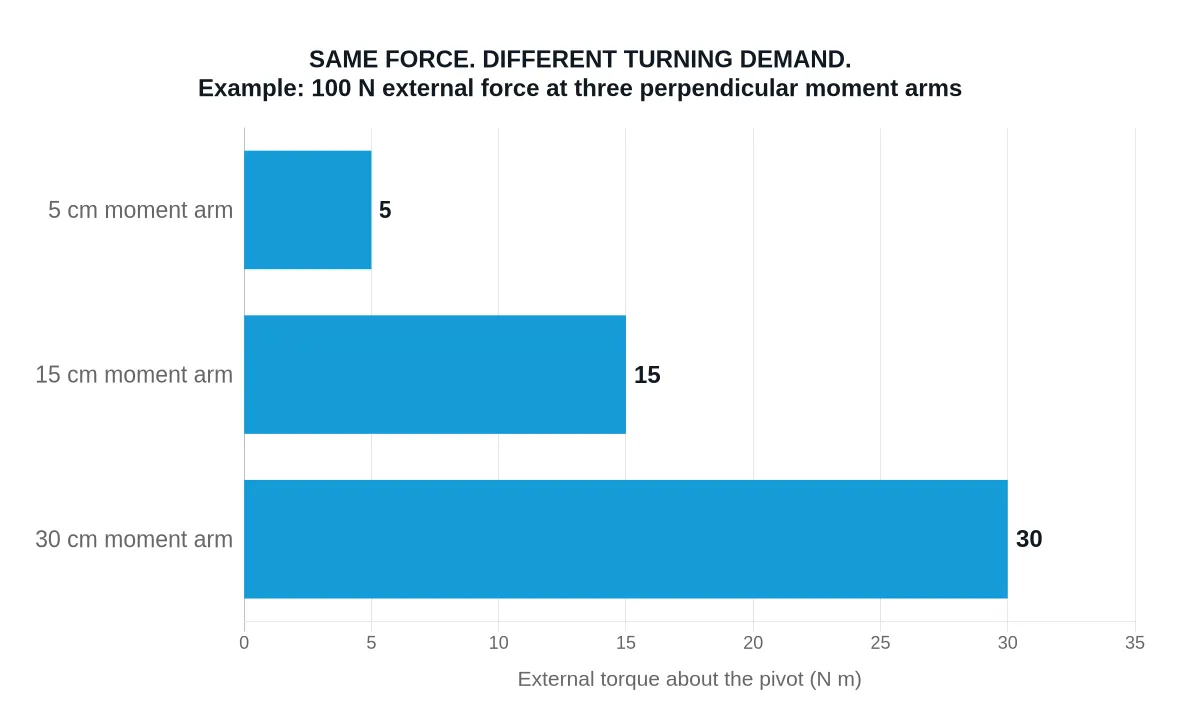
The sarcomere doesn’t know or care whether the resistance came from a barbell, a dumbbell, a cable, or a machine — it responds to the magnitude and duration of the mechanical signal reaching it. Free weights, cam-based machines and cable stacks each shape how that tension is distributed across a lift’s range of motion differently, but no modality has a demonstrated inherent hypertrophy advantage over the others when effort and progression are matched. The practical takeaway is to pick whichever modality lets you apply progressive overload consistently and safely for your joints.
A growing body of more recent work also points to the lengthened (stretched) position of a lift as a particularly effective place to accumulate tension, since a muscle loaded near full stretch experiences both high active tension and added passive tension from structural proteins like titin. That’s a live and evolving area of research rather than settled fact, but it’s consistent with the broader tension framework above.
Practical summary
- Mechanical tension is the best-supported primary driver of hypertrophy. Program around it first.
- Metabolic stress and muscle damage are not reliable independent growth levers once tension is accounted for — don’t chase the pump or excessive soreness for their own sake.
- Effort, not literal failure, is what the failure-proximity evidence actually supports. Leave a few reps in reserve on most working sets rather than grinding every set to failure.
- Load is flexible; effort near failure is not. Heavy and moderate loads produce comparable hypertrophy when taken close to failure.
- Progressive overload is what turns one good session into long-term growth. Without it, the tension stimulus stops exceeding what the tissue has already adapted to.
- Volume is a dose variable once tension thresholds are met — more hard sets generally help within recoverable limits, with diminishing returns at the high end.
The mechanistic picture has gotten clearer without getting more complicated: load the muscle with real tension, apply real effort, progress the demand over time, and repeat.
Plan progressive overload at home
Related guides
- Progressive overload in a small home gym
- How long to recover after a heavy leg day
- Best incline bench angle for upper chest
Sources checked September 29, 2026. Research summaries describe the cited studies; individual results vary.
1 thought on “Mechanical Tension and Muscle Growth: What Drives Hypertrophy”
Comments are closed.