
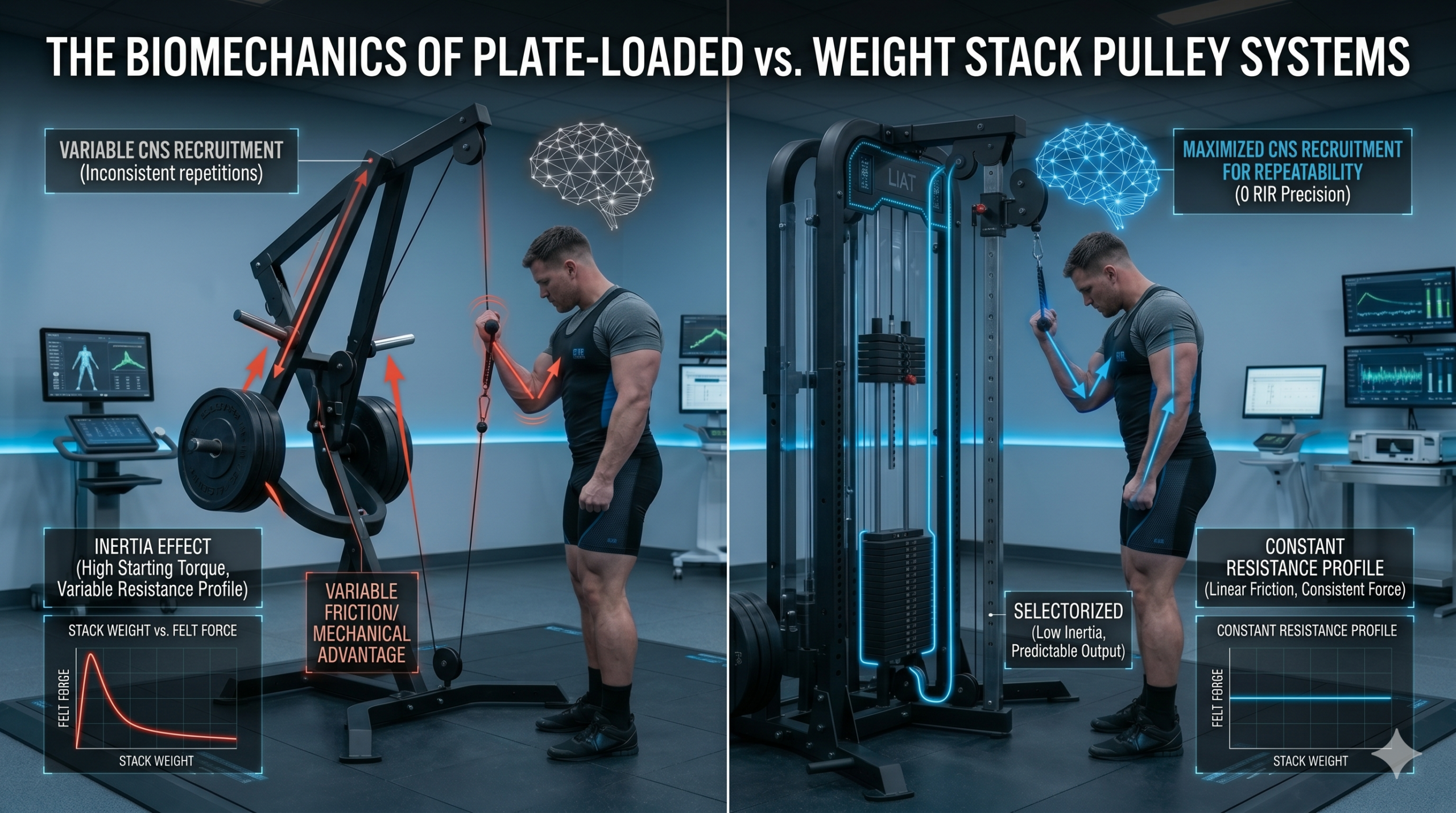
In our laboratory, we encounter a persistent question from coaches, athletes, and facility designers alike: does the loading mechanism of a resistance machine — plate-loaded versus weight stack pulley — meaningfully alter the biomechanical stimulus delivered to the target tissue? The answer, as we will detail in this analysis, is a definitive yes. However, the how and why are far more nuanced than most practitioners appreciate. The differences extend well beyond convenience or cost. They penetrate into resistance curve behavior, force-velocity relationships, pulley mechanical advantage ratios, and the degree to which a given system accommodates or challenges the human strength curve at specific joint angles.
In this institutional review, we will dissect both systems with clinical precision, covering the engineering variables that dictate “felt” load, the biomechanical implications for hypertrophy and strength adaptation, and the practical considerations that should inform equipment selection for any serious training environment. Our goal is not to declare a winner. Our goal is to ensure that every reader understands exactly what each system is doing to the musculoskeletal system, rep by rep, so that programming and equipment decisions are driven by evidence rather than brand loyalty or assumption.
At the most fundamental level, a plate-loaded system relies on free-weight plates — typically Olympic-standard 450 mm diameter discs — mounted onto a loading horn or sleeve that is mechanically linked to a lever arm, sled, or direct cable attachment. The mass of the plates, acted upon by gravitational acceleration (9.81 m/s²), generates the resistive force. This is the same gravitational loading principle that governs a barbell or dumbbell, but the machine’s linkage geometry mediates how that force is transmitted to the user.
Lever Arm Geometry and Its Effect on the Resistance Curve
We must emphasize a critical point: the resistance curve of a plate-loaded machine is not determined solely by the weight on the horn. It is determined by the interaction between the gravitational load vector and the machine’s lever arm geometry. Consider a plate-loaded chest press with a pivoting lever arm. At the bottom of the press (where the shoulder is in a position of greater horizontal abduction and the elbow is deeply flexed), the moment arm between the weight stack’s center of mass and the pivot may be at its longest. As the user presses to lockout, that moment arm may shorten, depending on the arc of the lever.
This means that plate-loaded systems can feel significantly harder in specific portions of the range of motion — often the shortened or near-lockout range — because the mechanical leverage of the machine changes the effective torque demand on the user’s joints throughout the movement. This is a feature, not a flaw. For advanced trainees seeking targeted overload at specific joint angles, this variable resistance profile can be a potent stimulus. But it must be understood and programmed accordingly.
Loading Potential and Progressive Overload Ceiling
One of the most cited advantages of plate-loaded systems in our work is their superior loading potential. A plate-loaded leg press, for example, can accommodate 500 kg or more with sufficient horn length and structural integrity. Weight stack machines, by contrast, are typically limited to a maximum stack of 90–150 kg (though some specialty units reach 200 kg). For athletes whose training demands exceed the stack ceiling — powerlifters, strongman competitors, advanced bodybuilders in the hypertrophy phase — plate-loaded machines offer a long-term progression pathway that stack systems simply cannot match without mechanical modification.
In exploring the intricacies of strength training equipment, the article “The Biomechanics of Plate-Loaded vs. Weight Stack Pulley Systems” provides valuable insights into how different resistance mechanisms affect muscle engagement and performance. For those interested in optimizing their training and recovery, a related article titled “Mitochondrial Health: The Hidden Key to Consistent Strength Gains” delves into the importance of mitochondrial function in enhancing recovery and overall strength. You can read more about this crucial aspect of fitness by following this link: Mitochondrial Health: The Hidden Key to Consistent Strength Gains.
How Weight Stack Pulley Systems Generate Resistance
A weight stack pulley system uses a series of rectangular cast-iron or steel plates, vertically stacked on guide rods, with a selector pin that allows the user to choose the desired load in fixed increments (typically 5–10 lb or 2.5–5 kg jumps). The selected plates are connected via a steel cable to one or more pulleys, which redirect the force vector to the user interface — a handle, bar, pad, or ankle strap.
The Role of Guide Rods and Friction
The guide rods in a weight stack system serve a dual purpose: they constrain the stack’s movement to a purely vertical path, and they provide structural alignment that prevents lateral play. However, guide rod friction is a biomechanically relevant variable that we account for in our analyses. As the stack travels, friction between the weight plates and the guide rods absorbs a small but measurable portion of the applied force. This friction is not constant — it varies with rod lubrication, plate tolerance, and even ambient temperature. The net effect is that the “felt” resistance on a weight stack machine may be slightly less than the nominal selected load, and this discrepancy can vary from rep to rep.
Despite this, weight stack systems generally provide a smoother, more consistent user experience compared to plate-loaded machines. The integrated guide rods and pulleys constrain the movement path more tightly, which reduces the user’s need to stabilize the load in secondary planes. This translates to a cleaner, more controlled feel — a characteristic that has significant implications for motor learning and rehabilitative contexts.
Pulley Ratios: The Hidden Variable
This is where we see the most widespread misunderstanding among practitioners, and we want to address it with absolute clarity. Not all weight stack machines deliver the selected load at a 1:1 ratio to the user. The pulley configuration determines the mechanical advantage of the system. A single fixed pulley redirects force without changing its magnitude — a 1:1 ratio. But many commercial machines use a compound pulley arrangement (a movable pulley or block-and-tackle configuration) that creates a 2:1 ratio, meaning the user handles only half the selected stack weight at the point of attachment.
For example, if a lat pulldown machine uses a 2:1 pulley ratio and the user selects 80 kg on the stack, the effective load at the handle is approximately 40 kg (minus friction losses). This means that comparing “the weight I use” across different machines — or between a plate-loaded and a stack machine — is biomechanically meaningless unless the pulley ratio is known and accounted for. We strongly recommend that facility managers and coaches identify and document the pulley ratio of every cable machine in their training environment.
Resistance Curve Behavior: A Comparative Biomechanical Analysis
The resistance curve — the profile of how external torque demand changes across the range of motion — is arguably the most important biomechanical variable differentiating these two systems. We will examine this in detail.
Plate-Loaded Resistance Curves
As we discussed, plate-loaded machines produce a resistance curve that is heavily influenced by lever arm geometry. Because the load is gravitational and the linkage is mechanical, the torque at the user’s joint changes as the lever arm’s effective moment arm relative to the weight changes throughout the arc of motion. This often results in a resistance curve that does not perfectly match the human strength curve, which typically peaks in the mid-range of a movement and declines at end-range positions. In some plate-loaded designs, the mismatch is intentional — the machine is engineered to create peak resistance at a specific joint angle for targeted overload purposes.
Weight Stack Resistance Curves
Weight stack machines, particularly those using cable-and-pulley systems with cam-shaped pulleys (often called “eccentric cams” or “variable-radius pulleys”), can be engineered to more closely approximate the human strength curve. The cam shape alters the effective moment arm of the cable around the pulley as it rotates, increasing or decreasing the mechanical advantage at different points in the range of motion. A well-designed cam system can deliver peak resistance at the joint angle where the user is strongest and reduce it where the user is weakest, theoretically optimizing the tension-stimulus across the entire repetition.
However, we must note an important caveat: the quality and accuracy of cam profiling varies enormously between manufacturers. A poorly designed cam can produce a worse resistance curve match than a simple plate-loaded lever arm. The loading type (plate vs. stack) is only one variable. The machine’s specific geometry — pulley placement, cam shape, cable routing, lever arm length, and pivot location — collectively determine the actual biomechanical stimulus. We cannot overstate this: two machines of the same category (e.g., two weight stack chest presses) can produce meaningfully different resistance curves based on design alone.
Sure, here is the sentence with the clickable link:
Check out the latest fitness program at Hypertrophy Protocol for effective muscle building.
Implications for Hypertrophy, Strength, and Motor Learning
Understanding the engineering differences is necessary, but our primary concern as analysts is what these differences mean for training outcomes. We will address three domains: hypertrophy, maximal strength, and motor learning.
Hypertrophy Considerations
For hypertrophy, the critical variable is mechanical tension applied to the target muscle through a sufficient range of motion, with adequate volume and proximity to failure. Both plate-loaded and weight stack systems can deliver effective hypertrophic stimuli. However, the resistance curve profile influences where in the range of motion the muscle experiences peak tension. A plate-loaded machine that creates maximal resistance at the shortened position (where many muscles are weakest) may produce greater metabolic stress and motor unit recruitment at that position, potentially enhancing the hypertrophic stimulus in that region of the strength curve. Conversely, a cam-profiled stack machine that matches the strength curve may allow the user to maintain more consistent tension throughout the full range, potentially accumulating more total mechanical work per repetition.
Our recommendation for hypertrophy-focused programming is to use both systems strategically — selecting machines based on their resistance curve profiles to ensure that all portions of the range of motion receive adequate overload across the training mesocycle.
Maximal Strength Considerations
For maximal strength, plate-loaded systems hold a distinct advantage in two respects. First, their higher loading ceiling accommodates the heavier absolute loads required for maximal strength training. Second, their less “smoothed” resistance profiles may better prepare athletes for the variable force demands encountered in free-weight competition lifts, where no cam or pulley mediates the resistance.
Motor Learning and Beginner Considerations
Weight stack systems are consistently favored in our protocols for beginner populations and rehabilitative settings. The reasons are biomechanically sound: the pin-selectable load changes are fast and require no plate handling (reducing injury risk during setup), the guide-rod-constrained movement path reduces the degrees of freedom the novice must control, and the smoother resistance delivery allows the beginner to focus on proprioceptive feedback and movement quality rather than fighting an unpredictable resistance curve. For motor learning, reducing extraneous variability is a well-established principle, and weight stack machines achieve this effectively.
In exploring the nuances of resistance training equipment, a fascinating comparison can be drawn between the biomechanics of plate-loaded systems and weight stack pulley systems. For those interested in optimizing their lifting techniques, the article on the benefits of Westside hole spacing for precision bench press safety offers valuable insights into how equipment design can enhance performance and safety. This connection highlights the importance of understanding the mechanics behind various training tools, which can significantly impact workout effectiveness. You can read more about it in this related article.
Equipment Engineering Standards: What to Demand
| Metrics | Plate-Loaded System | Weight Stack Pulley System |
|---|---|---|
| Resistance | Uses actual weight plates for resistance | Uses a stack of weight plates with a pulley system for resistance |
| Adjustability | Can easily adjust the weight by adding or removing plates | Adjustable weight increments with a pin or selectorized system |
| Smoothness | May have a more natural feel due to the direct resistance | May provide a smoother feel due to the pulley system |
| Space | Requires more space for storing weight plates | Compact design with weight stack built into the machine |
| Cost | Initial cost may be lower, but requires purchasing weight plates | Higher initial cost, but no need to purchase additional weight plates |
In our facility evaluations, we assess equipment against strict engineering criteria. For any serious training environment — whether commercial gym, university athletic center, or private hypertrophy lab — we recommend the following minimum standards.
Frame Construction and Steel Gauge
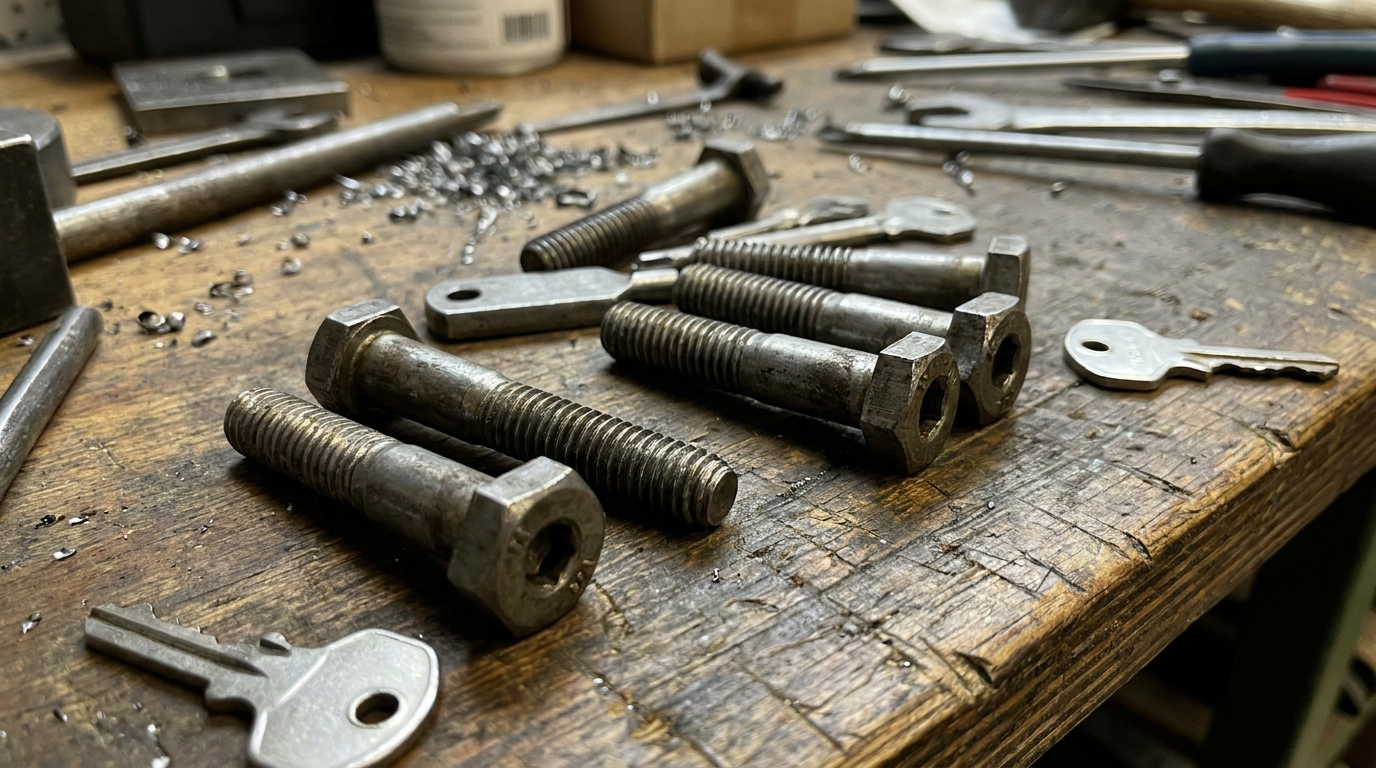
We specify 11-gauge steel (approximately 3.05 mm wall thickness) as the minimum acceptable standard for structural tubing in both plate-loaded and weight stack machines intended for heavy or institutional use. Thinner gauges (14-gauge, for instance, at approximately 1.98 mm) are acceptable for light residential equipment but are inadequate for facilities where loads will regularly exceed 150 kg or where the equipment must withstand thousands of use cycles per month. A 3×3 inch (76.2 mm x 76.2 mm) rack specification using 11-gauge steel provides the structural rigidity and fatigue resistance necessary for long-term institutional deployment.
Weld Quality and Hardware
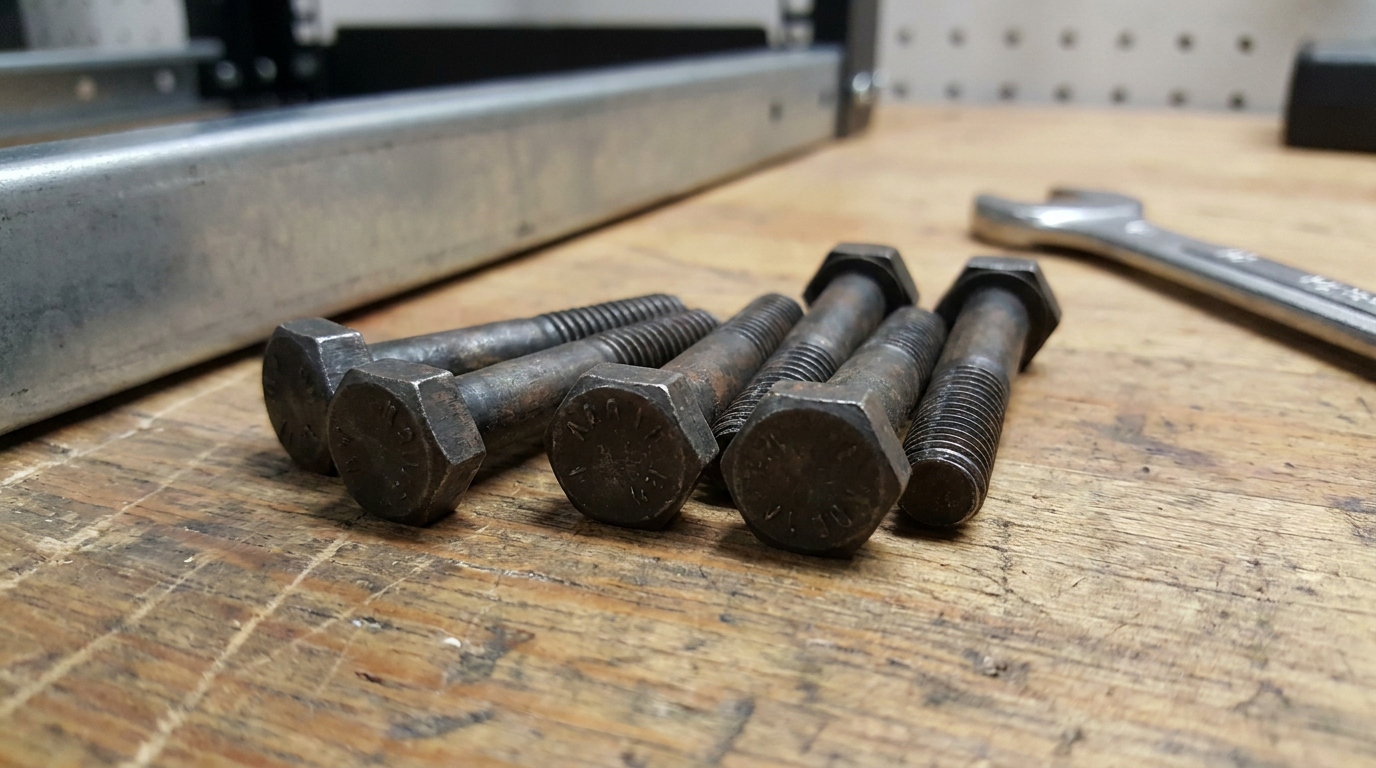
We inspect all welds for full penetration and consistency. Plate-loaded machines, in particular, concentrate high static and dynamic loads at the pivot point and loading horn junction — these are critical failure points if weld quality is substandard. All bolts should be Grade 8 minimum, and pivot points should use sealed bearings rather than bushings wherever possible to ensure smooth, low-friction articulation over the life of the equipment.
Cable and Pulley Specifications
For weight stack machines, we require aircraft-grade steel cable (typically 7×19 construction for flexibility and fatigue resistance) with a minimum breaking strength of 2,000 lb (approximately 907 kg). Pulleys should be fiberglass-reinforced nylon or machined aluminum with sealed ball bearings. The pulley diameter directly affects cable wear and smoothness of operation — we recommend a minimum of 3.5 inches (89 mm) for primary load-bearing pulleys.
Practical Decision Framework: Selecting the Right System
We conclude with a synthesis of our analysis into a practical framework. The decision between plate-loaded and weight stack pulley systems should not be made categorically. It should be made contextually, based on the specific training objective, population, and facility constraints.
Choose plate-loaded systems when:
- The training population requires loading beyond typical stack ceilings (>150 kg effective load)
- The programming targets specific joint-angle overload that the machine’s lever geometry provides
- Long-term progressive overload with fine-grained load increments (via fractional plates) is a priority
- The user base is experienced enough to handle manual plate loading safely
Choose weight stack pulley systems when:
- The population includes beginners, rehabilitation patients, or unsupervised users
- Rapid load changes are needed for techniques like drop sets, supersets, or circuit training
- A smooth, consistent resistance profile is desired for motor learning or joint-sensitive populations
- The cam profile of the specific machine has been verified to match the target muscle’s strength curve
In all cases, we urge practitioners to evaluate each individual machine on its own mechanical merits — pulley ratio, cam profile, lever geometry, frame construction, and steel gauge — rather than making blanket assumptions based on whether the machine is plate-loaded or stack-driven. The biomechanical stimulus is a product of the entire mechanical system, not merely the source of the load. Our commitment is to ensure that every equipment decision in our domain is grounded in engineering reality and physiological evidence, not convention.