
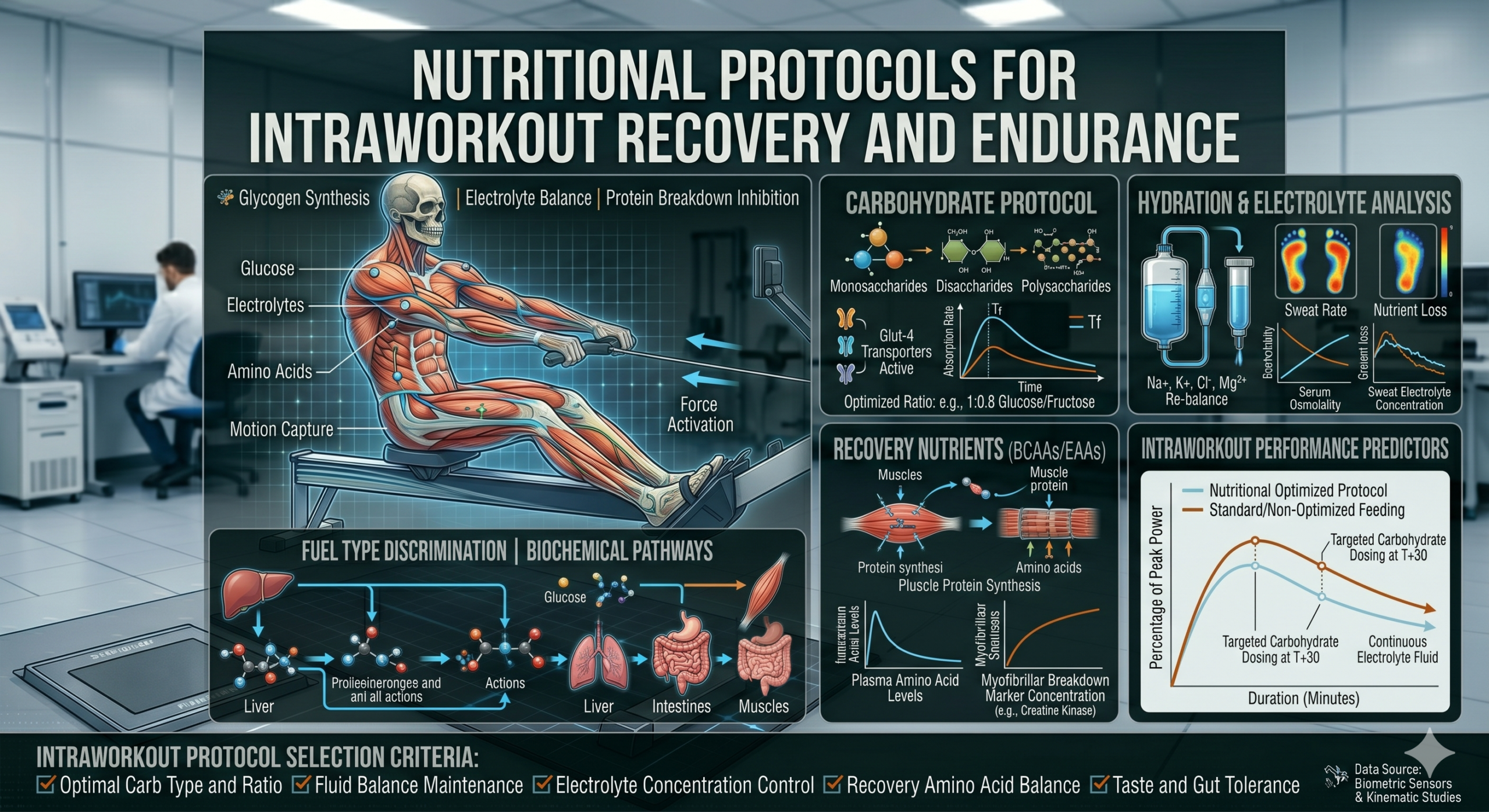
At the Hypertrophy Protocol Lab, we approach intra-workout nutrition not as an afterthought or a marketing opportunity, but as a precise intervention rooted in substrate metabolism, fluid dynamics, and neuromuscular performance science. The period during active training represents a unique metabolic window — one where the body is simultaneously catabolizing fuel stores, generating metabolic waste products, losing electrolytes through sweat, and accumulating peripheral and central fatigue. How we fuel during this window directly determines the quality of work output, the onset of fatigue, and the trajectory of subsequent recovery.
In this protocol document, we outline our evidence-based framework for intra-workout nutritional strategies. We address carbohydrate delivery, electrolyte management, hydration architecture, protein co-ingestion, and individualization principles. Every recommendation is grounded in current metabolic science and calibrated for athletes and trainees engaged in sessions exceeding moderate duration and intensity thresholds.
Before we prescribe any nutritional intervention, we must first understand the metabolic landscape of prolonged exercise. During resistance training, high-intensity interval work, or endurance-based sessions, the body relies on a combination of fuel substrates: muscle glycogen, blood glucose, intramuscular triglycerides, and, to a lesser extent, circulating amino acids.
Glycogen Depletion as the Primary Performance Limiter
Muscle glycogen — the stored form of glucose within skeletal muscle tissue — serves as the dominant fuel source for moderate-to-high-intensity exercise. During sessions exceeding approximately 60 minutes, glycogen stores in the active musculature become progressively depleted. This depletion correlates directly with the onset of what endurance athletes colloquially call “bonking” — a sudden, severe decline in work capacity caused by inadequate substrate availability for continued muscular contraction.
Key takeaway: For any training session exceeding 60 minutes in duration, exogenous carbohydrate delivery during the session is not optional — it is a physiological necessity to sustain output and delay glycogen-mediated fatigue.
Central Fatigue and Blood Glucose Maintenance
Beyond the peripheral muscle, falling blood glucose levels during prolonged exercise contribute to central fatigue — a reduction in neural drive originating from the central nervous system. When blood glucose drops, the brain’s capacity to sustain motor unit recruitment diminishes. This manifests as a perceived increase in effort, reduced coordination, and impaired decision-making. Intra-workout carbohydrate ingestion helps maintain euglycemia (normal blood sugar levels), thereby attenuating central fatigue mechanisms and preserving both physical and cognitive performance.
For those interested in enhancing their performance during workouts, a related article on Nutritional Protocols for Intraworkout Recovery and Endurance can be found at this link. This resource provides valuable insights into optimizing nutrient intake to support endurance and recovery, making it a great complement to your training regimen.
Carbohydrate Delivery Protocols: Timing, Dosing, and Source Selection
Our carbohydrate protocols during training are built on three pillars: consistent delivery, appropriate dosing, and optimized source selection. We reject the outdated approach of relying on a single high-sugar bolus midway through a session. Newer guidance — and our own applied data — emphasizes steady, distributed carbohydrate delivery throughout the training window.
Dosing Guidelines Based on Session Duration
We categorize intra-workout carbohydrate needs by session length:
- Sessions under 45 minutes: Generally, no intra-workout carbohydrate is necessary for individuals with adequate pre-training glycogen stores. A mouth rinse with a carbohydrate solution may provide a small central nervous system benefit without caloric load.
- Sessions of 60–90 minutes: We recommend 30–60 grams of carbohydrate per hour, consumed in small, regular intervals (every 15–20 minutes) rather than in one or two large doses.
- Sessions exceeding 90 minutes: Intake should increase to 60–90 grams per hour, and this is where source selection becomes critical.
The Glucose-Fructose Advantage
Emerging evidence strongly supports the use of glucose-fructose blends over glucose-only formulations for sessions exceeding 60–90 minutes. The physiological rationale is straightforward: glucose and fructose are absorbed through different intestinal transporters. Glucose is absorbed via the SGLT1 transporter, while fructose utilizes the GLUT5 transporter. By engaging both pathways simultaneously, we increase the total rate of carbohydrate absorption beyond the approximately 60 grams per hour ceiling imposed by glucose-only intake.
In practical terms, a 2:1 ratio of glucose (or maltodextrin) to fructose allows absorption rates approaching 90 grams per hour. This enhanced delivery translates to superior substrate availability, reduced gastrointestinal distress compared to equivalent doses of glucose alone, and — critically — improved endurance capacity and subsequent performance. Research indicates that glucose-fructose blends can enhance subsequent endurance capacity more effectively than glucose alone, making this our default recommendation for extended sessions.
Practical Delivery Methods
We favor liquid carbohydrate solutions for intra-workout delivery due to their rapid gastric emptying and ease of titration. Carbohydrate concentrations of 6–8% (6–8 grams per 100 milliliters) represent the optimal range for simultaneous hydration and fuel delivery. Gels and chews are acceptable alternatives when fluid intake is separately managed, but they must be consumed with water to facilitate absorption and prevent gastrointestinal stalling.
Electrolyte Replacement: A Non-Negotiable Intra-Workout Priority
We consider structured electrolyte replacement to be a core pillar of any intra-workout nutritional protocol. Sweat is not merely water — it is a hypotonic solution containing significant concentrations of sodium, potassium, magnesium, and chloride. The loss of these ions during training directly impairs muscle contractile function, nerve signal transmission, fluid balance regulation, and cardiovascular stability.
Sodium: The Primary Electrolyte of Concern
Sodium is the electrolyte lost in the greatest quantity through sweat, with individual sweat sodium concentrations ranging from approximately 200 to over 1,500 milligrams per liter depending on genetics, heat acclimation status, and fitness level. Sodium replacement during exercise maintains plasma volume, supports glucose absorption in the small intestine (sodium is a co-transporter with glucose via SGLT1), and prevents the dangerous condition of exercise-associated hyponatremia — a dilutional drop in blood sodium caused by excessive water intake without adequate sodium replacement.
We recommend a baseline intra-workout sodium intake of 300–600 milligrams per liter of fluid consumed, adjusted upward for heavy sweaters, hot environments, or sessions exceeding 90 minutes. Athletes with known high sweat rates or salty sweat (identifiable by white residue on clothing) may require individualized sweat testing to optimize sodium delivery.
Potassium and Magnesium: Supporting Roles with Functional Significance
Potassium is essential for maintaining the electrochemical gradient across muscle cell membranes — the fundamental mechanism enabling muscle contraction and relaxation. Magnesium acts as a cofactor for over 300 enzymatic reactions, including those governing ATP metabolism and neuromuscular transmission. While the acute intra-workout losses of these minerals are smaller than sodium losses, chronic under-replacement contributes to cramping, impaired contractile efficiency, and prolonged recovery timelines. We include modest amounts of both (typically 50–100 mg potassium and 30–60 mg magnesium per liter) in our intra-workout formulations.
Sure, here is the sentence with the clickable link:
Check out the latest fitness program at Hypertrophy Protocol for effective muscle building.
Hydration Architecture: Structured Fluid Intake Protocols
We use the term “hydration architecture” deliberately. Fluid intake during training must be planned, measured, and systematized — not left to the unreliable signal of thirst, which lags behind actual fluid deficit by a significant margin, particularly in trained individuals and in cool or indoor environments where perceived sweat loss is low.
Pre-Loading, Sustained Intake, and Post-Session Repletion
Our hydration protocol operates in three interconnected phases:
- Pre-loading (2–3 hours before training): Consume 5–7 milliliters of fluid per kilogram of body mass. This allows time for renal equilibration and ensures the athlete begins the session in a euhydrated state.
- Intra-session intake: Consume 150–250 milliliters of fluid every 15–20 minutes, adjusted for environmental temperature, humidity, and individual sweat rate. This fluid should contain the electrolyte and carbohydrate concentrations described above.
- Post-session repletion: Replace 125–150% of body mass lost during the session over the subsequent 4–6 hours. The overcompensation accounts for ongoing renal and respiratory fluid losses.
Monitoring Hydration Status
We recommend that athletes monitor hydration through body mass changes pre- and post-session (each kilogram of mass lost approximates one liter of fluid deficit) and through urine color assessment (target: pale straw color, corresponding to a specific gravity below 1.020). These are low-cost, high-validity monitoring tools that require no laboratory access.
For athletes seeking to enhance their performance, understanding nutritional protocols for intraworkout recovery and endurance is crucial. A related article discusses the importance of strength training equipment in professional settings, emphasizing how the right tools can significantly impact training outcomes. You can read more about this in the article on why 3×3 steel racks are the gold standard for professional performance facilities. By integrating proper nutrition with effective training equipment, athletes can optimize their recovery and endurance levels.
Protein Co-Ingestion: Bridging Intra-Workout and Recovery Windows
| Protocol | Benefits | Recommended Intake |
|---|---|---|
| Carbohydrates | Provides energy for endurance | 30-60 grams per hour |
| Protein | Promotes muscle recovery | 10-20 grams per hour |
| Electrolytes | Helps maintain hydration and prevent cramping | As needed based on sweat rate |
While carbohydrates and electrolytes dominate our intra-workout priorities, protein co-ingestion represents an increasingly validated strategy for enhancing recovery trajectory and subsequent performance. The traditional model strictly separated intra-workout fueling (carbohydrates) from post-workout recovery (protein). Our current evidence base supports a more integrated approach.
Mechanisms of Benefit
When protein — specifically, rapidly digestible protein such as whey hydrolysate or essential amino acids (EAAs) — is co-ingested with carbohydrates during or immediately following exhaustive exercise, several synergistic effects occur:
- Enhanced glycogen resynthesis: Protein co-ingestion stimulates additional insulin secretion beyond that produced by carbohydrates alone. Insulin is a potent activator of glycogen synthase, the rate-limiting enzyme in glycogen storage. This effect is particularly meaningful when carbohydrate availability is suboptimal (i.e., when the athlete cannot consume sufficient carbohydrates alone to maximize glycogen restoration).
- Attenuation of muscle protein breakdown: Providing amino acids during or immediately after exercise reduces the net catabolic state of skeletal muscle, shifting the balance toward repair and remodeling.
- Improved subsequent performance: Evidence now indicates that protein taken with carbs after exhaustive exercise may increase glycogen synthesis rates and support recovery in ways that enhance performance in subsequent sessions — a critical consideration for athletes training multiple times per day or on consecutive days.
Practical Recommendations
We recommend 15–25 grams of high-quality protein (whey isolate, hydrolysate, or EAA blend) consumed either in the final third of the training session or within the first 30 minutes following session completion. This should accompany, not replace, adequate carbohydrate intake.
Individualization: The Final and Most Critical Variable
We must be direct: no single intra-workout protocol is universally optimal. The variables that determine an individual’s precise nutritional requirements during training are numerous and include body mass, lean mass, training intensity and volume, session duration, environmental conditions, sweat rate, sweat composition, gut tolerance, metabolic efficiency, training phase, and competitive proximity.
Tailoring Across Nutrients
Recent review literature reinforces what we have observed in our applied work — that the following nutritional variables should all be individualized to the athlete and the specific recovery window:
- Carbohydrate type and dose: Some athletes tolerate high intra-workout carbohydrate loads; others experience gastrointestinal distress that must be managed through gut training (progressive increases in intra-workout carbohydrate intake over weeks).
- Protein timing and quantity: Athletes in energy deficit, those performing multiple daily sessions, or those with elevated lean mass may require higher or more frequent protein delivery.
- Ergogenic adjuncts: Caffeine (3–6 mg/kg, taken pre- or early-intra-session) can enhance endurance and reduce perceived exertion. Sodium bicarbonate (0.2–0.3 g/kg, taken 60–90 minutes pre-session) buffers hydrogen ion accumulation during high-intensity glycolytic work. Creatine monohydrate (3–5 g daily, chronic loading) supports phosphocreatine resynthesis. Each of these has a robust evidence base, but their application must be calibrated to the individual’s tolerance, goals, and competitive context.
Systematic Testing and Iteration
We advocate a structured testing process: establish a baseline protocol based on the guidelines above, implement it consistently for 2–3 weeks, collect performance and subjective tolerance data, and iterate. Intra-workout nutrition is not something we set once and forget — it is a dynamic variable that we refine as the athlete’s training demands, body composition, and environmental exposure evolve.
Summary of Protocol Priorities
To synthesize our framework into actionable priorities, we present the following hierarchy:
| What to Do | Why It Helps |
|||
| Consume 30–90 g/hr of carbohydrates during sessions >60 min | Maintains blood glucose, delays glycogen depletion, attenuates central fatigue |
| Use glucose-fructose blends (2:1 ratio) for sessions >90 min | Engages dual intestinal transporters, increases total absorption rate, reduces GI distress |
| Deliver carbohydrates steadily every 15–20 minutes | Provides consistent substrate availability; avoids glycemic spikes and crashes |
| Replace sodium at 300–600 mg per liter of fluid | Maintains plasma volume, supports glucose co-transport, prevents hyponatremia |
| Include potassium and magnesium in electrolyte formulations | Preserves muscle contractile function and enzymatic efficiency |
| Structure fluid intake at 150–250 mL every 15–20 minutes | Prevents progressive dehydration that impairs thermoregulation and cardiovascular output |
| Co-ingest 15–25 g protein during or immediately after training | Enhances glycogen resynthesis, reduces muscle protein breakdown, improves subsequent performance |
| Individualize all variables and iterate based on data | Maximizes protocol efficacy for the specific athlete, session type, and environment |
Our position is unambiguous: intra-workout nutrition is a trainable, optimizable, and performance-determining variable. We treat it with the same rigor and specificity that we apply to programming, load selection, and recovery modalities. The protocols outlined above represent our current best-practice framework — one that we will continue to refine as the evidence base evolves.