Best Rack Attachments for Lat Width and Thickness

Lifter using a cable attachment for a lat pulldown.

  Short answer: a rack-mounted lat pulldown and low row combo covers most of what your lats need, and handle choice matters less than most guides claim. The popular rule of “pulldowns for width, rows for thickness” is a coaching shorthand, not a tested finding. Both movements train the lats. What shifts the emphasis most … Read more


How Long to Recover After a Heavy Leg Day

Lifter resting after a heavy leg session beside a loaded rack.

Updated October 2026. General training information, not medical advice. You just finished a heavy leg day, and you want to know how long to recover before you train legs hard again. For most lifters who train consistently, 48 to 72 hours is enough for strength to come back after a typical hard session. Sets taken … Read more

Progressive Overload in a Small Home Gym

Lifter adding a weight plate to a barbell in a compact home gym.

Updated October 9, 2026. Equipment specs are from manufacturer pages, checked October 2026. This is general training information, not medical advice. Your adjustable dumbbells top out at 80 lb, your goblet squat is getting easy, and there is no heavier weight in the garage. You can keep building muscle anyway, because across a wide range … Read more

The Relationship Between Testosterone Levels and Performance Environments

Athlete resting after a strength training session in a gym.

  Short answer: your training environment does move testosterone around, but mostly in small, short-lived swings that don’t decide how much muscle you build. What matters far more is avoiding the things that keep testosterone chronically low: short sleep, very low energy intake, excess body fat, and untreated medical problems. If you have symptoms of … Read more

Plate-Loaded vs Weight Stack Cable Machines: Which Is Better?

Lifter between plate-loaded and selectorized cable stations.

Short answer: neither is better across the board. Plate-loaded machines win on load ceiling, cost, and fine increments with small plates; weight stack machines win on speed of changing weight and a smoother, more controlled feel. For muscle growth, both work well. What matters more than the loading type is the specific machine’s pulley ratio … Read more

How to Prevent Rust on Home Gym Equipment (Coastal Guide)

Home gym owner wiping a steel rack upright near the coast.

  Rust is the most preventable way a home gym loses value, and in humid basements, uninsulated garages and coastal homes it’s also the most common. A 3×3, 11-gauge rack can last decades or start pitting within a few years, and the difference is mostly moisture, salt, and how quickly chips in the finish get … Read more

Power Rack Hole Size: 5/8 vs 1 Inch Hardware Compatibility

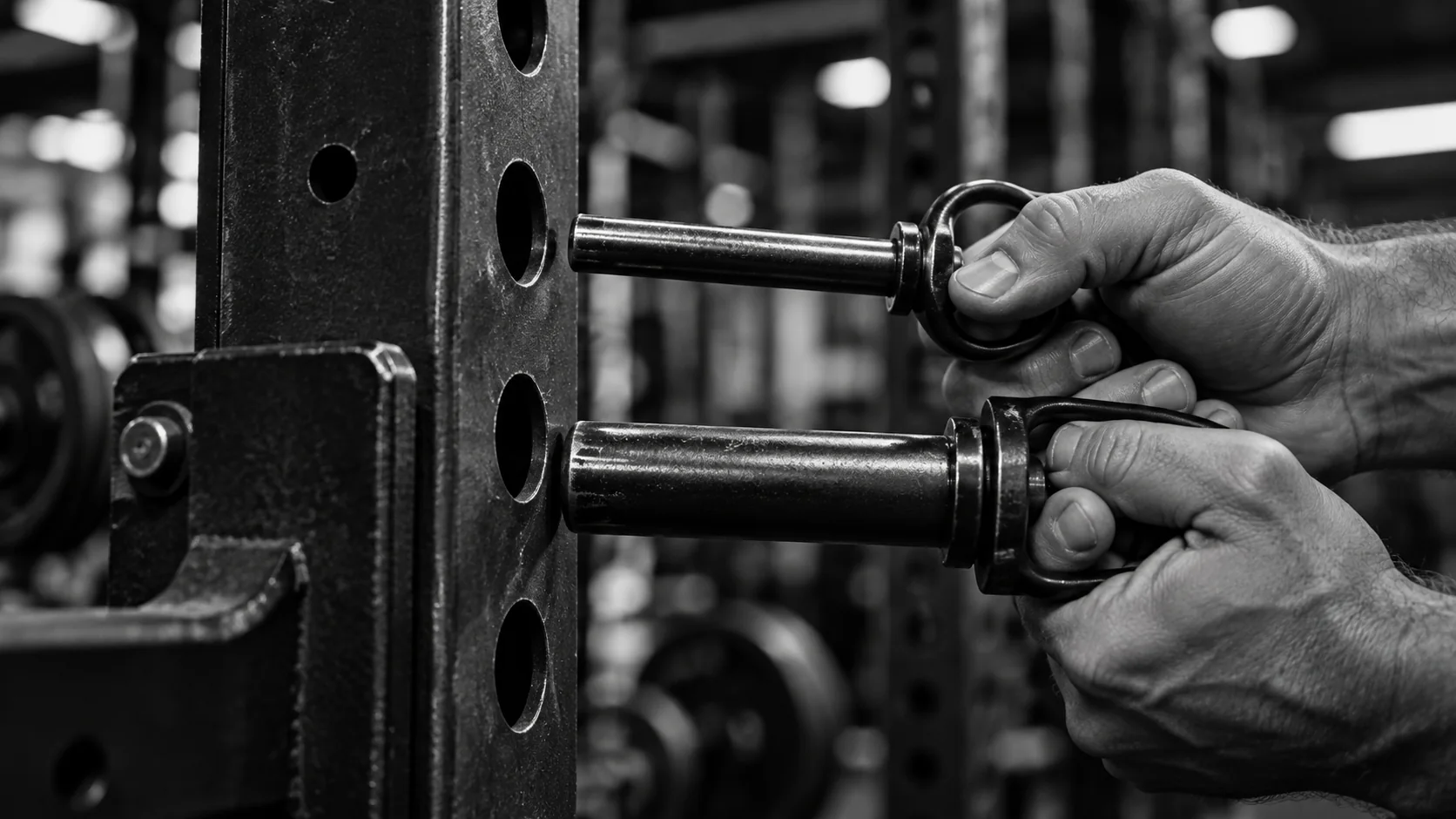
Two different attachment pins held beside holes in a power rack upright.

Short answer: hole size decides which attachments fit your rack, not how much weight it holds. Both 5/8-inch and 1-inch hardware are far stronger than anything a lifter can put through a J-cup. The real differences are fit, pin play, and which attachment catalogs you can buy from. This guide covers which racks use which … Read more

PEMF Therapy for Bodybuilders: Does it Actually Work?

PEMF-style recovery mat and controller next to a gym bench, illustrative image.

Last updated October 9, 2026. This guide is based on published research, and each claim links to the study behind it. General information, not medical advice. If you’re thinking about buying a PEMF device to recover faster between sessions or to add muscle, the human research doesn’t justify the purchase yet. The case for PEMF … Read more