The Neurological Benefits of Red Light Therapy for Strength Athletes

Within our laboratory, we have observed a growing body of clinical evidence suggesting that red light therapy—more precisely termed photobiomodulation (PBM)—offers neurological advantages that extend well beyond superficial tissue repair. For strength athletes operating under high neuromuscular demand, repeated mechanical stress, and significant central nervous system (CNS) fatigue, these benefits represent a meaningful frontier in … Read more

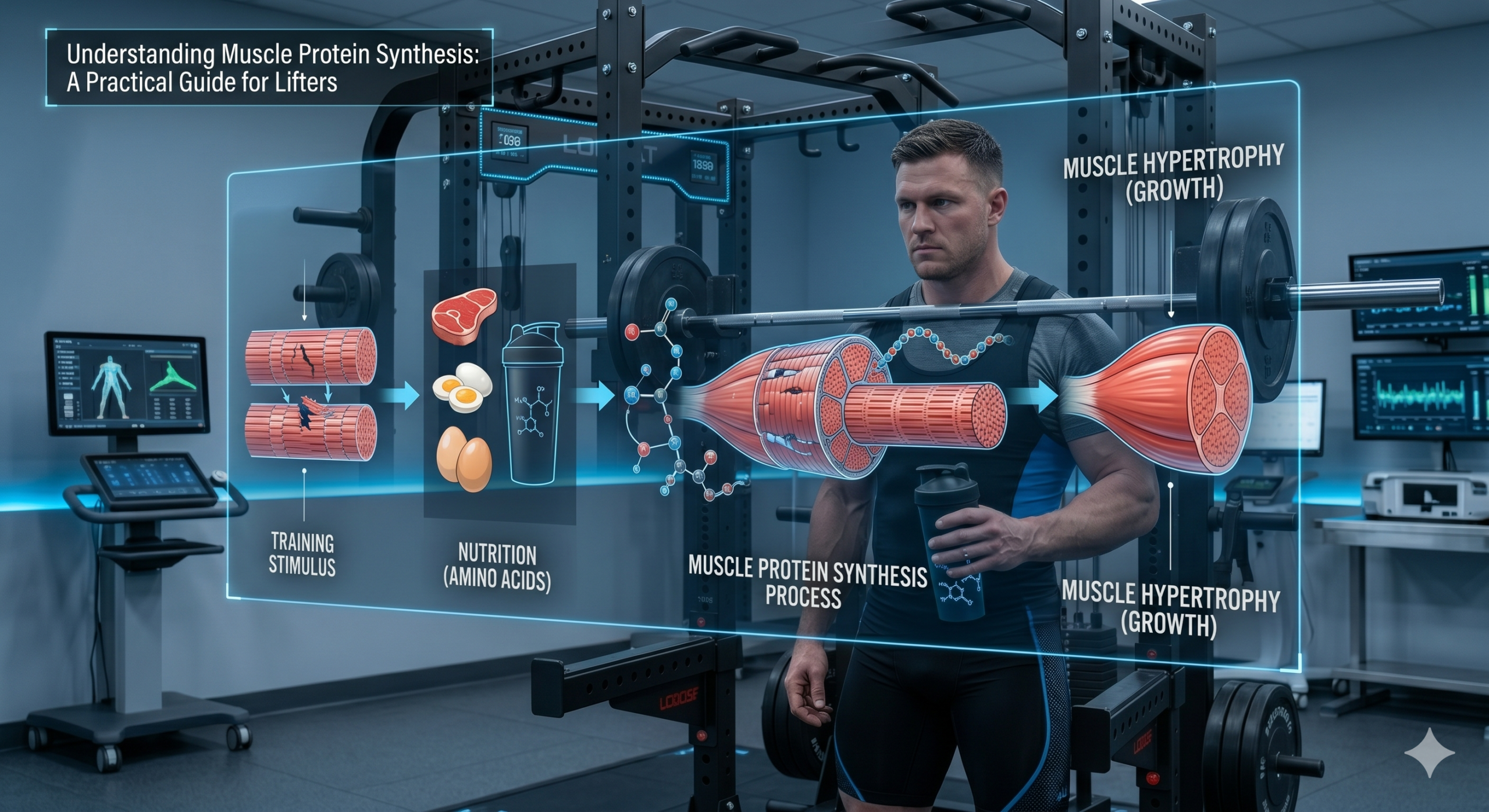
Understanding Muscle Protein Synthesis: A Practical Guide for Lifters

  At the Hypertrophy Protocol Lab, we consider muscle protein synthesis (MPS) the single most consequential molecular event for anyone pursuing skeletal muscle hypertrophy. Yet despite its centrality, MPS remains widely misunderstood—reduced to oversimplified “anabolic window” dogma or buried under impenetrable biochemistry. In this guide, we bridge the gap between molecular signaling research and practical … Read more

The Impact of Chronic Inflammation on Muscle Fiber Recruitment

At the Hypertrophy Protocol Lab, we have long recognized that the relationship between inflammation and muscle performance extends far beyond simple tissue damage and repair. Chronic low-grade inflammation—often termed “inflammaging” when age-related—represents one of the most insidious barriers to optimal muscle fiber recruitment, force production, and adaptive hypertrophy. In this analysis, we present a comprehensive … Read more

How to Optimize Your Sleep Environment for Maximum Anabolic Recovery

  At the Hypertrophy Protocol Lab, we regard sleep environment optimization as a non-negotiable variable in the anabolic recovery equation. While most practitioners fixate on training volume, nutrient timing, and supplementation protocols, we consistently observe that the physical sleep environment—the measurable conditions under which nocturnal recovery occurs—represents one of the most underleveraged interventions available to … Read more

PEMF Therapy for Bodybuilders: Does it Actually Work?

At the Hypertrophy Protocol Lab, we evaluate every recovery modality through the lens of mechanistic plausibility, peer-reviewed evidence, and real-world applicability to resistance-trained populations. Pulsed Electromagnetic Field (PEMF) therapy has migrated from clinical rehabilitation settings into the performance optimization arena, and bodybuilders—who operate under chronic mechanical stress, elevated inflammatory loads, and compressed recovery windows—are increasingly … Read more

Mitochondrial Health: The Hidden Key to Consistent Strength Gains

When we evaluate why certain trainees plateau despite progressive overload adherence, adequate protein intake, and sufficient training volume, we consistently find that the conversation neglects a fundamental biological substrate: mitochondrial health. At the Hypertrophy Protocol Lab, we have observed that the athletes and clients who sustain consistent strength gains over years—not weeks—share a common physiological … Read more

The Role of Mechanical Tension in Modern Hypertrophy Protocols

For over two decades, the applied exercise science community operated under a tripartite model of muscle hypertrophy, attributing growth to three ostensibly equal mechanisms: mechanical tension, metabolic stress, and muscle damage. We now possess sufficient evidence—culminating in a landmark November 2025 systematic review published in the Journal of Sport and Health Science and reinforced by … Read more

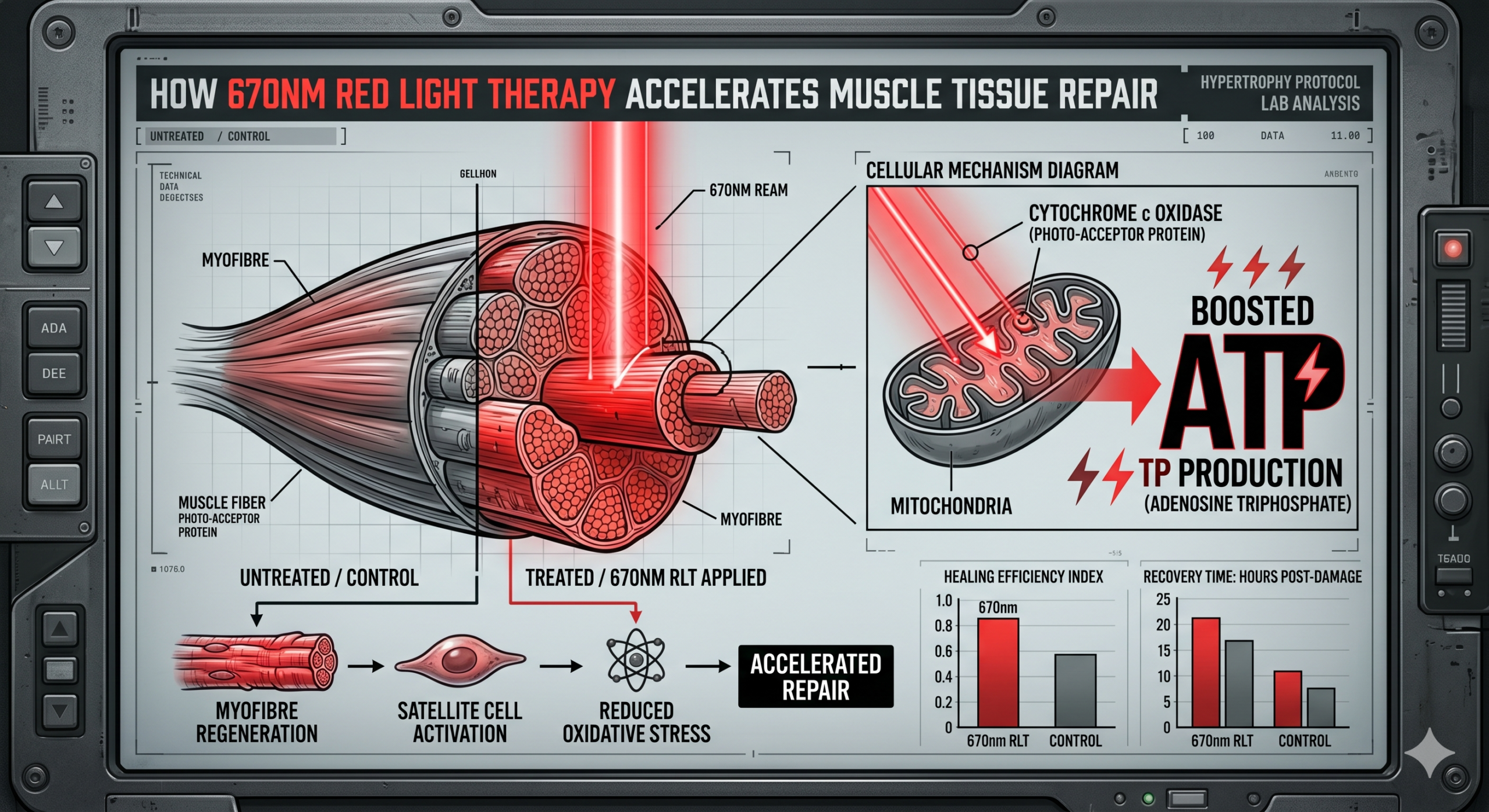
How 670nm Red Light Therapy Accelerates Muscle Tissue Repair

  At our lab, we approach every recovery modality with a singular question: what is the precise biophysical mechanism, and at what parameters does it produce a measurable tissue-level outcome? Photobiomodulation (PBM)—the clinical term for therapeutic light application—has moved well beyond speculative territory. Within the red and near-infrared (NIR) spectrum, the 670nm wavelength occupies a … Read more

The Science of Myofibrillar Hypertrophy vs. Sarcoplasmic Growth

The debate surrounding myofibrillar hypertrophy versus sarcoplasmic growth has persisted in exercise science for decades, often oversimplified into binary categories that fail to capture the nuanced biology occurring within skeletal muscle fibers. At our laboratory, we have committed significant analytical resources to dissecting the mechanistic underpinnings of each hypertrophic pathway—not as competing phenomena, but as … Read more