
Disclosure: this guide contains affiliate links, and Hypertrophy Protocol may earn a commission at no extra cost to you.
Specs and prices checked on Weight It Out’s site on November 5, 2026. We own two of the solid steel 25s, one gold and one silver, plus the silver solid steel 10s and have trained with them for more than eight months. The 45s, 5s, 2.5s, the cast iron line and the Thumper bumpers are covered from Weight It Out’s published specs, not our own testing.
Weight It Out’s solid steel plates are the thinnest plates we have used. A 25 is half an inch thick and so is a 10, so a pair barely takes up any room on the bar. After more than eight months in a garage gym near the coast, ours have no rust. They are worth it if space on your sleeves, horns or plate storage is what limits you. They are not quiet, they cost more than Weight It Out’s own cast iron plates, and the 45s are made in batches, so you wait for them.
Quick verdict
- What we like: very thin, so you can fit a lot more weight on a bar or a loading horn; clean machined edges; no rust after eight months in salt air; made in the USA with a lifetime warranty.
- What we don’t: they clank like any metal plate; the steel 45 is no thinner than the cheaper cast iron 45; preorder only, made in six-week batches.
- Best for: heavy lifters who run out of sleeve, plate-loaded machines with short horns, small gyms where plate storage is tight.
- Skip them if: you drop the bar from overhead, train where noise matters, or your current plates already fit with room to spare.
What we own and how we use them
Our set is two 25s, one gold and one silver, plus silver 10s. Gold and silver are both a coating over the same solid steel plate, and Weight It Out sells every size in either color at the same price. We use them on the barbell and plan to add more pairs for leg days as the numbers go up, which is exactly where thin plates pay off: the heavier you get, the more of the sleeve you need.
The first thing you notice is how little room they take. By the published specs, our whole set, two 25s and two 10s, stacks to about 2 inches. That is less than a single 2.4 inch rubber bumper 45.
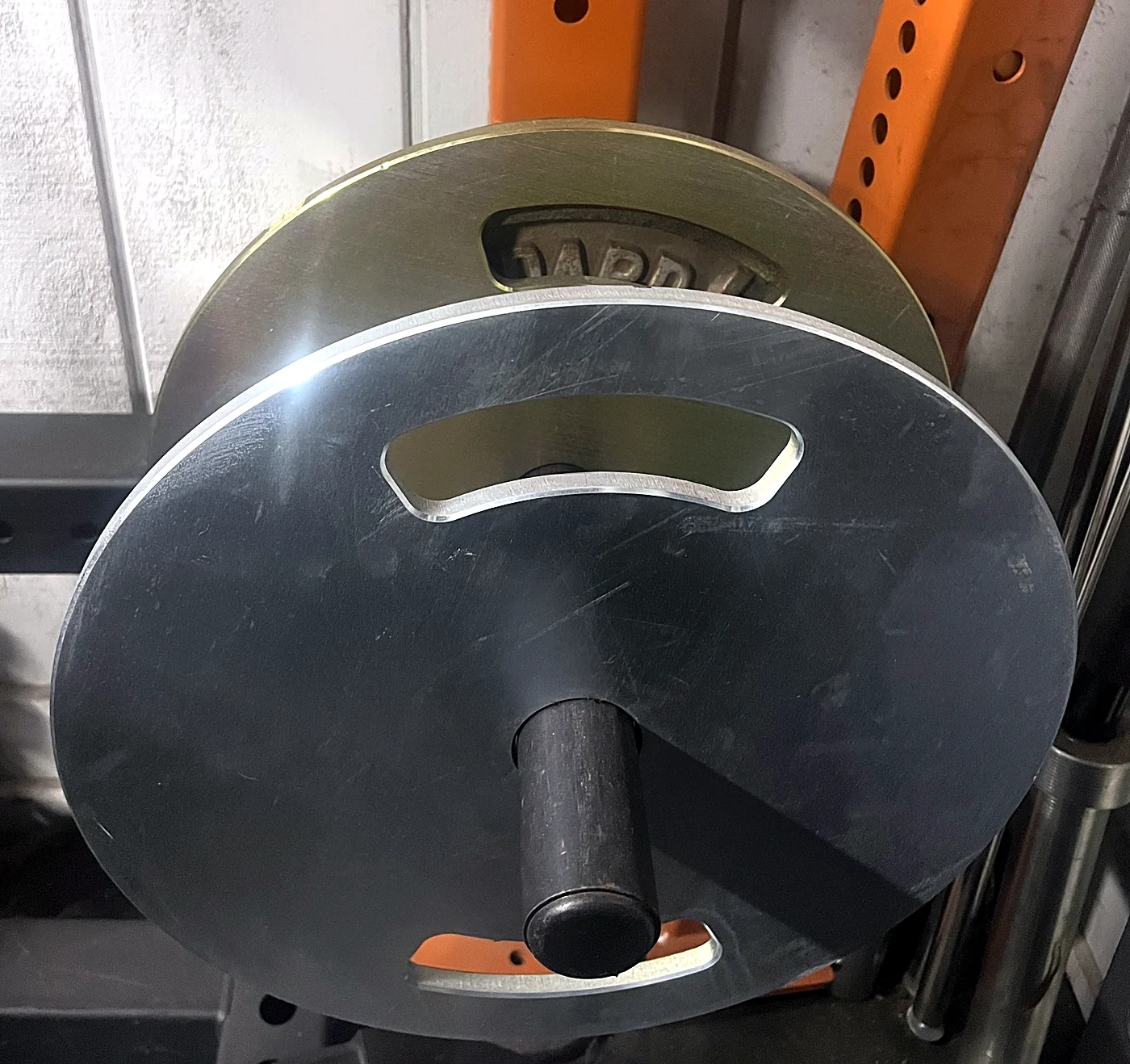
How thin are Weight It Out solid steel plates?
These are the published dimensions and pair prices for the solid steel line. Plates are sold in pairs, gold or silver, with free custom engraving of up to 20 characters.
| Plate | Thickness | Diameter | Price per pair |
|---|---|---|---|
| 45 lb | 3/4 in | 17.72 in | $430.00 |
| 25 lb | 1/2 in | 16 in | $169.99 |
| 10 lb | 1/2 in | 9-7/8 in | $87.99 |
| 5 lb | 3/8 in | 8 in | $51.99 |
| 2.5 lb | 3/8 in | 6.25 in | $39.99 |
Weight It Out says every steel plate is calibrated within 0.25% of its stated weight and that the edges are now machined and beveled, so there are no sharp corners. We have not weighed ours on a calibrated scale, so treat the tolerance as the maker’s claim.
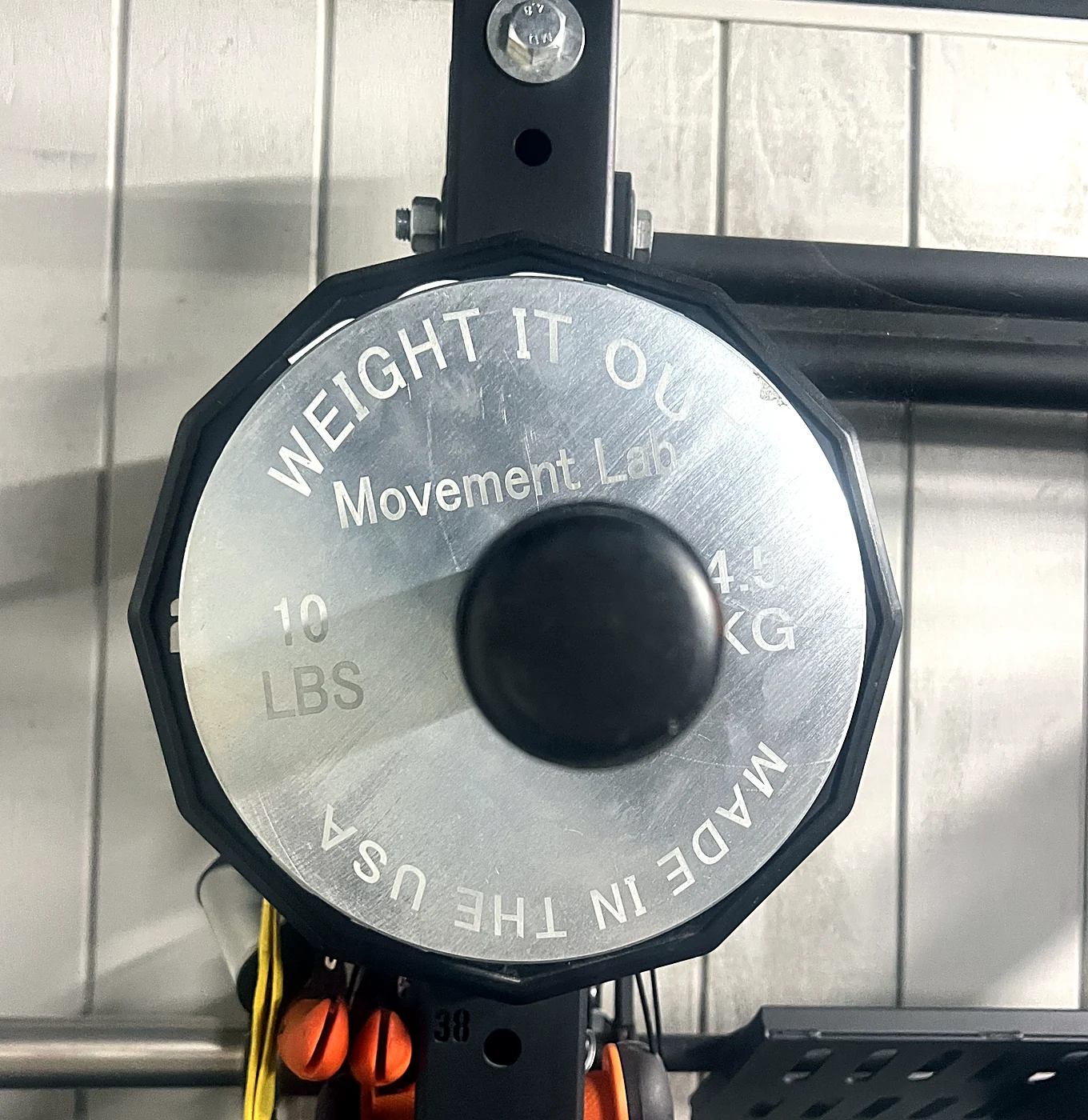
Check the current price and batch date on the Weight It Out solid steel plate page before you order.
How much fits on a bar
Plate thickness decides how much weight you can load before you run out of sleeve. Using a 16.4 inch sleeve, the loadable length of a Rogue Ohio Bar:
- Steel 45s at 3/4 in: about 21 per side.
- Typical rubber bumper 45s at 2.4 in (Rogue Echo V2): 6 per side.
- Steel 25s at 1/2 in: about 32 per side.
Nobody will load 21 plates a side, and your bar’s rating will run out long before the sleeve does. The practical win is smaller: a heavy squat or deadlift fits with room for a collar, and a short horn on a plate-loaded machine, landmine or belt squat holds noticeably more. Collars use up sleeve space too, so leave room for them.
To check your own bar and plates, use our plate calculator. It shows what to load for a target weight and how many plates of a given model fit on your sleeve, including Weight It Out plates.
They are loud, and the Thumper is the quiet option
These are bare steel plates, and they make the usual clank when they touch each other or the rack. If you train early in the morning, in an apartment, or anywhere noise is a problem, this is the biggest drawback. They are also metal plates, not bumpers, so don’t drop them from overhead.
If you need quiet, Weight It Out’s Thumper thin bumper plates are the version to look at. Each one has a solid steel core in a compression-molded polyurethane shell rated at 90 durometer, so it is firm, with less bounce than a rubber bumper. A Thumper 45 is 1.3 in thick, compared with 3/4 in for the steel 45, but still far thinner than most bumpers. We plan to add a set for quieter training. As of November 5, Weight It Out lists the 45s and the black 25s and 10s as out of stock until the end of January, with preorders open.
Rust and finish after eight months
Our garage is in salt air near the coast, which is hard on bare steel and on cheap coatings. After more than eight months our plates show no rust. That is one owner’s experience over a limited time, not a lab test, but it is the condition that matters most where we train.
Weight It Out is upfront that it uses industrial steel and industrial coatings, and that small surface scratches or cosmetic marks under the coating can happen. If you live near the ocean, wiping the plates down now and then and keeping them off a wet floor is cheap insurance for any steel plate.
Solid steel vs cast iron vs Thumper
Weight It Out makes three thin plate lines. The choice comes down to which sizes you need thin, how accurate you want them, and whether noise matters.
| Solid steel | Cast iron (machined) | Thumper | |
|---|---|---|---|
| 45 lb thickness | 3/4 in | 3/4 in | 1.3 in |
| 25 lb thickness | 1/2 in | 5/8 in | 1 in |
| 10 lb thickness | 1/2 in | 5/8 in | 1.1 in |
| Stated tolerance | within 0.25% | ±1% (45s) | 1.5%, typically within 1% |
| 45 lb pair price | $430.00 | $229.99 (black) | $259.99 |
| Finish | Gold or silver coating | Black or custom colors | Black; 45s also in blue |
The steel 45 is the same thickness as the cast iron 45, so the extra money there buys tighter accuracy and the gold or silver finish, not more sleeve space. The steel line does save space on the 25s and 10s. A reasonable mix for a home gym is cast iron 45s with steel 25s and 10s, unless you want the whole set matched and calibrated.
See the cast iron plates and the solid steel plates on Weight It Out’s site.
Buying details to know before you order
- Preorder batches: the solid steel plates are made in batches, with a new batch going into production every six weeks, so expect a wait.
- Shipping: free to the lower 48 states on orders over $500.
- Returns: 15 days after delivery for unused items. You pay return shipping, and returns that aren’t for a defect carry a restocking fee.
- Warranty: lifetime warranty on the plates.
- Made in the USA: Weight It Out says the steel is 100% American made.
- Fit: 2 inch center hole for Olympic bars. Weight It Out recommends magnetic collars; spring clips work on any Olympic sleeve.
Who should buy them, and who should skip them
Buy them if you are running out of room on your sleeves, your plate-loaded machine has short horns, you want accurate plates for strength work, or your plate storage is cramped. They also make sense if, like us, you want plates that hold up in damp or salty air.
Skip them if you do Olympic lifts or drop the bar, you need a quiet setup, or you are on a tight budget. Standard iron plates do the same job for far less money if you don’t need the space.
Weight It Out plates FAQ
Are Weight It Out plates worth it?
They are worth it if sleeve space or storage is your limit. The steel 25s and 10s are half an inch thick, which lets you load much more weight than standard plates. If space isn’t a problem, cheaper plates will do the same job.
Are Weight It Out steel plates loud?
Yes. They clank like any metal plate. Weight It Out’s Thumper plates, with a steel core and a polyurethane shell, are the quieter option.
Do Weight It Out plates rust?
Ours have no rust after more than eight months in a garage in salt air. They are coated steel, so wiping them down and keeping them dry still helps.
Is the steel 45 thinner than the cast iron 45?
No. Both are listed at 3/4 inch. The steel line is thinner in the 25s and 10s, at 1/2 inch versus 5/8 inch for cast iron, and has a tighter stated tolerance.
Do they fit any Olympic bar?
Yes. They have a 2 inch center hole for standard Olympic bars, sleeves and loading horns.
How long does shipping take?
The solid steel plates are preorder only and made in batches every six weeks, so your wait depends on where the current batch is. Check the product page for the latest timing.
Ready to order? Shop Weight It Out solid steel plates.
Related: Plate calculator · How much does a barbell weigh · Plate-loaded vs weight stack cable machines · Garage gym layout