Tendon Training for Jumpers: What Makes Tendons Stiffer
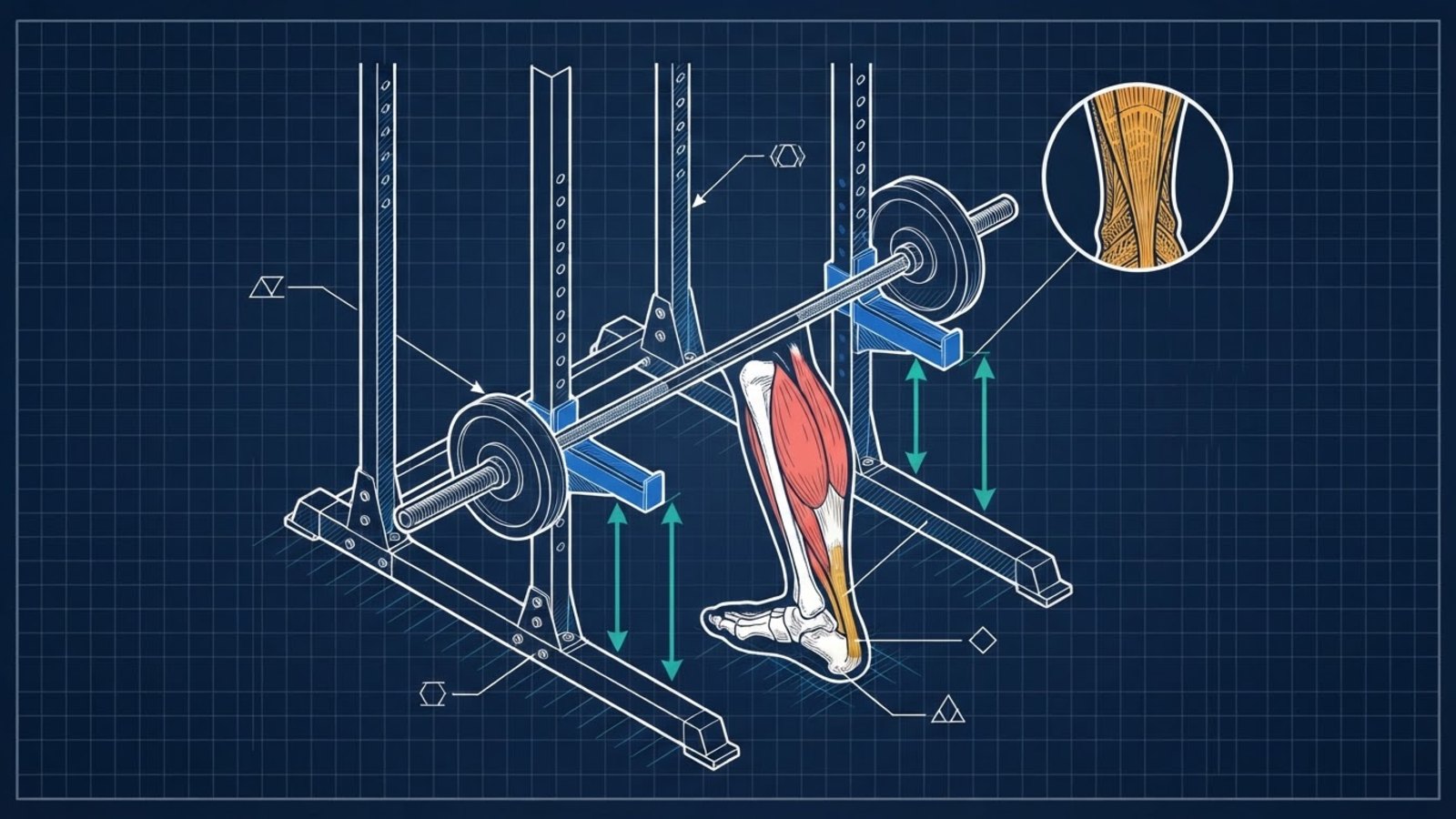
AI concept illustration for tendon training: a barbell under safety pins in a power rack, with a cutaway of the calf muscle and Achilles tendon and a close-up of tendon fibers.

Short answer: tendons get stiffer when you load them heavily, and in one 14-week trial, about 3 seconds of hard tension per rep raised Achilles stiffness more than 12-second holds did. Heavy holds and slow, heavy lifts raised stiffness more than jumping did in head-to-head trials. Tendons also change slowly: about 3 months in one … Read more


Pogo Jumps: How to Do Them, What They Train and How Many to Do

Pogo Jumps: What they train and how many to do. Hypertrophy Protocol Jump Protocols cover.

Short answer: pogo jumps are small, quick, repeated hops off the balls of your feet with stiff ankles and almost straight knees. They train the springy, fast-contact part of jumping. Few studies test pogo jumps on their own, but programs built on hopping and other quick jumps improved joint stiffness, jump height and even running … Read more

Broad Jump: How to Do It, How to Test It and How to Improve It

Broad Jump: How to do it, test it and improve it. Hypertrophy Protocol Jump Protocols cover.

Short answer: the standing broad jump (also called the standing long jump) is a two-footed jump forward for distance from a standstill. It’s one of the most widely used tests of leg power, and in adults it was a valid measure of lower-body explosive strength. Practice it a few times before you test, because people … Read more

Squats for Vertical Jump: How Deep, How Heavy and What the Research Says

Squats for Vertical Jump: How deep and how heavy. Hypertrophy Protocol Jump Protocols cover.

Short answer: yes, squats raise your vertical jump, but depth matters. Deep squats raised jump height in controlled trials and quarter squats didn’t. Heavy squats and light jump squats improved jumping about equally in weaker lifters, and heavy squats added far more strength. Squats alone aren’t the whole answer, though: pairing them with jumps beat … Read more

Depth Jumps: What They Do, Box Height and When to Start

Depth Jumps: Box height and when to start. Hypertrophy Protocol Jump Protocols cover.

Short answer: a depth jump (also called a drop jump) means stepping off a low box and jumping as high as you can the moment you land. They train you to absorb and reuse force fast, and they improve reactive strength. But they aren’t magic: regular jumps raised jump height as much or more in … Read more

Plyometrics for Vertical Jump: What Works, How Much and How Long

Plyometrics for Vertical Jump: Exercises, contacts and weeks. Hypertrophy Protocol Jump Protocols cover.

Short answer: plyometric training raises vertical jump height reliably, by about 4.7% to 8.7% on average depending on the jump tested (Markovic, 2007). The programs that did best ran longer than 10 weeks, used more than 20 sessions and more than 50 jumps per session, and mixed several jump types (de Villarreal et al., 2009). … Read more

How to Jump Higher: What the Research Says

How to Jump Higher: What the research says. Hypertrophy Protocol Jump Protocols cover.

Short answer: jump training (plyometrics), heavy squats to full depth and Olympic lift variations all raise your vertical jump in controlled studies, and combining heavy lifting with jumps works better than lifting alone. Plyometric programs added about 4.7% to 8.7% to jump height on average, so a 20 in jump might gain about 0.9 to … Read more