

Short answer: pogo jumps are small, quick, repeated hops off the balls of your feet with stiff ankles and almost straight knees. They train the springy, fast-contact part of jumping. Few studies test pogo jumps on their own, but programs built on hopping and other quick jumps improved joint stiffness, jump height and even running economy. Use them as a warm-up and as an early, low-stress plyometric.
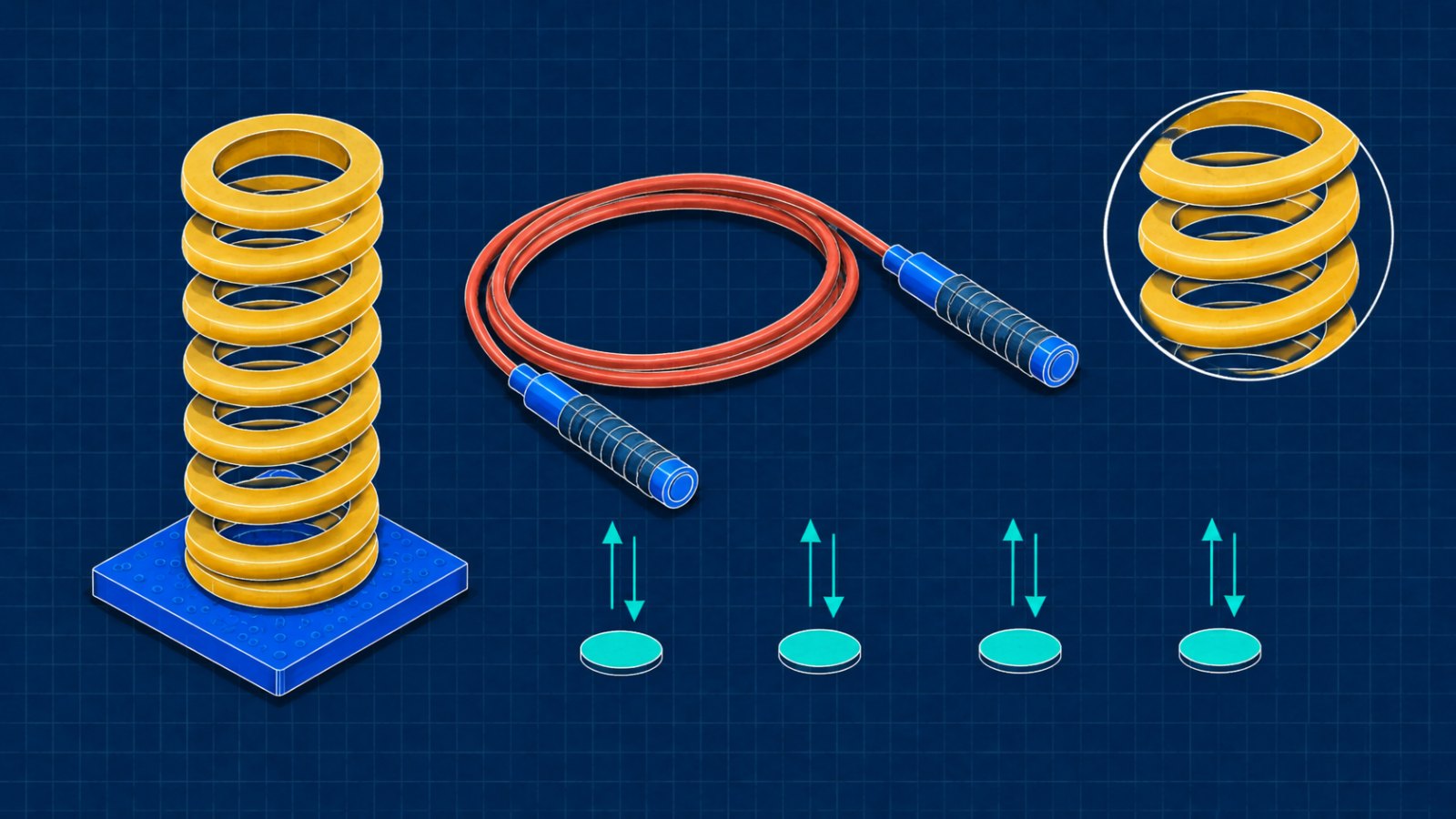
How to do pogo jumps
These cues are coaching practice, not research findings:
- Stand tall with feet about hip width apart and your weight on the balls of your feet.
- Bounce straight up using mostly your ankles. Knees bend only a little.
- Keep your heels just off the ground and your ankles stiff, like a spring.
- Spend as little time on the ground as you can. Think “the floor is hot.”
- Stop the set when your contacts get slow or your heels start dropping.
Variations: forward and backward pogos, side-to-side pogos, single-leg pogos (harder), and max-height pogos where each hop goes as high as possible while keeping contacts short.
What pogo jumps train
- Joint and muscle stiffness. In a 12-week trial, plyometric training of the calves with hopping and drop jumps raised ankle joint stiffness and all three jump heights tested, while weight training didn’t raise joint stiffness (Kubo et al., 2007). In another trial, plyometric training raised active muscle stiffness during fast stretching (Kubo et al., 2017).
- Tendons, a little. Plyometric training raised tendon stiffness in a meta-analysis (SMD 0.55) (Ramírez-delaCruz et al., 2022), and short-term plyometric jump training ranked highest for Achilles tendon size in a network meta-analysis (Fu et al., 2026). But fast one-legged jumps changed Achilles stiffness less than slow, heavy 3-second loading in a direct comparison (Bohm et al., 2014), so pogos don’t replace heavy tendon work.
- Running. In 17 male runners, 6 weeks of plyometrics added to normal running raised lower leg stiffness, countermovement jump height and running economy, and improved 3 km time by 2.7%, with no change in the control group (Spurrs et al., 2002).
Using pogos as a test
Repeated hops can measure reactive strength index (RSI): jump height divided by ground contact time. You need a jump mat or a slow-motion video app that times contacts.
- A test of repeated ankle-only rebound jumps was highly reliable in trained athletes (ICC above 0.90). It was good for spotting a moderate change, like after a training block, but marginal for small week-to-week changes (Tourillon et al., 2024).
- Repeated hop tests, drop jumps and countermovement rebound jumps gave different results and only weakly to moderately related numbers, so don’t compare RSI across different tests (Eadie et al., 2026).
Our guide to measuring your vertical at home covers the phone app method.
How many pogo jumps to do
This is our take; no trial has tested pogo dose on its own:
- Warm-up: 2 to 3 sets of 10 to 20 easy pogos before jump or sprint work.
- Training: 2 to 3 sets of 10 to 15 fast pogos, counted in your total ground contacts for the session.
- Progression: two feet in place, then forward and side to side, then single-leg, over several weeks.
- Volume: every hop is a ground contact. The best jump programs in the research went beyond 10 weeks, with more than 50 jumps a session, building up gradually (de Villarreal et al., 2009).
The Vertical Jump Planner opens the first lower-body day of each week with pogo hops and counts them in your weekly contacts.
FAQ
What muscles do pogo jumps work?
Mostly the calves and the Achilles tendon, with the ankles doing most of the work and the knees and hips staying fairly stiff.
Are pogo jumps good for vertical jump?
They train the fast, springy part of jumping. Hopping-based plyometrics raised jump height in trials, but pogos work best as one piece of a program that also has bigger jumps and heavy squats.
Are pogo jumps hard on your Achilles?
They’re a lower-intensity plyometric, which is why they’re used early, but they still load the Achilles repeatedly. Build up the volume slowly. If your Achilles hurts, stop and see a clinician.
How high should pogo jumps be?
For most sets, low and fast: focus on short ground contact, not height. Max-height pogos are a separate, harder variation.
See also: Plyometrics for Vertical Jump and Depth Jumps. For the tendon side, see Tendon Training for Jumpers.
Sources checked against PubMed on November 10, 2026. This is training information, not medical advice.