
Disclosure: Hypertrophy Protocol may earn a commission if you buy through some links on this page, at no extra cost to you.
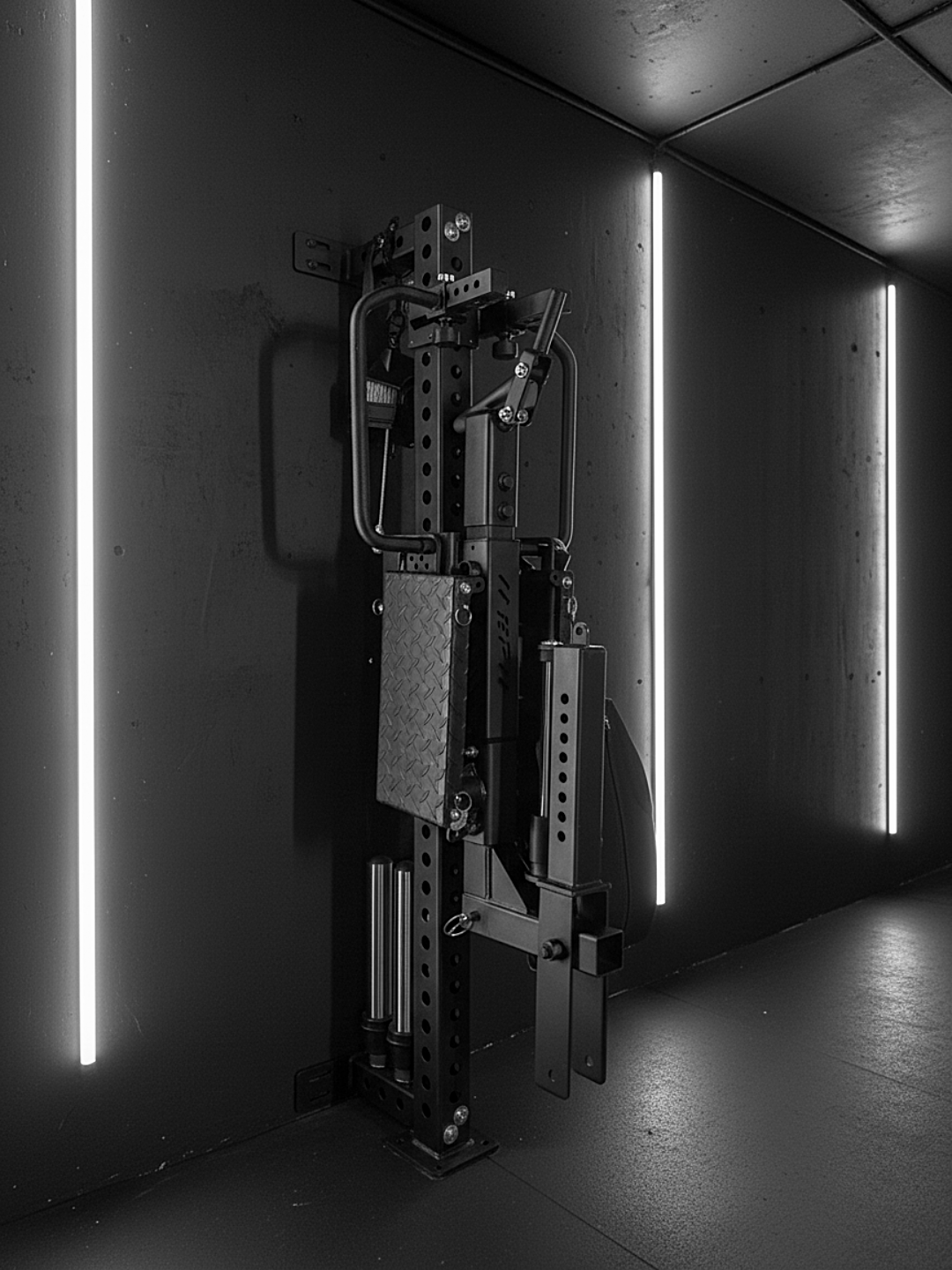
You own a power rack and want belt squats, but a standalone machine would take floor space your garage does not have. A rack mounted belt squat attachment can fill that gap if it matches your upright size and hole diameter. Several universal arms accept 5/8 or 1 inch holes on 3×3 uprights and some also fit 2×2 or 2×3, while the vertical units from Rogue and Titan and the cable version from REP fit only their makers’ own racks.
The fit table below covers twelve attachments, with every spec taken from the maker’s own product page and checked on September 28, 2026. Five of those makers publish no load capacity, and the table marks each one.
At a glance
| Your rack | Attachment | Capacity (published) | Main catch |
|---|---|---|---|
| Rogue Monster Series or Fortis | Rogue Monster Rhino Belt Squat, Drop-In | Not published | Must be bolted down; tower sits about 21.5″ behind the uprights |
| Titan X-3, TITAN Series or T-3 | Titan Rack Mounted SquatMax-MD | 1,000 lb belt; 1,300 lb loading pin | 48″ x 34.5″ footprint; 184 lb |
| REP PR-4000 or PR-5000 V2 | REP Belt Squat | 600 lb | Needs the Lat Pulldown and Low Row or the Ares; belt sold separately |
| Sorinex rack with Jammer Arms | Sorinex JˣSquat | No figure published | Jammer Arms not included |
| Other 2×2 or 2×3 rack | Fringe Mammoth Belt Squat | 900 lb | Fringe pitches it for a sturdy, bolted rack |
| Other 3×3 rack | A pin-in lever arm, or the Bulletproof VBS for a vertical path | 275 lb (Valor) to 900 lb (Fringe); VBS 650 lb | Most makers publish nothing on anchoring |
Specs from the makers’ product pages, checked September 28, 2026. Upright and hole sizes aren’t a guarantee for every rack. Confirm before ordering.
Which belt squat attachment fits your rack?
Start with the two columns that can rule a product out on their own: rack fit and design. Bolting and floor space only matter once an attachment physically fits your uprights.
| Attachment | Rack fit | Design | Stability and extras | Published size | Capacity | Source |
|---|---|---|---|---|---|---|
| Titan Rack Mounted SquatMax-MD | X-3 and TITAN Series (center of uprights); T-3 on the 3″ side; 16 mm pins | Vertical line of drive with platform | Kickstand steadies it while mounting; floor bolting not mentioned | 48″ W x 34.5″ D footprint; 184 lb | 1,000 lb belt; 1,300 lb loading pin | Titan |
| Rogue Monster Rhino Belt Squat, Drop-In | Monster Series and Fortis racks only; sized for 3×3 racks with 43″ inside width | Vertical trolley on a rail | Must be bolted to the floor; frame bolts to the rack | 49″ W x 48.5″ D x 78.5″ H; tower extends about 21.5″ behind the uprights; 455 lb | Not published | Rogue |
| REP Belt Squat | PR-4000 and PR-5000 V2; not Apollo | 1:1 cable and pulleys | Needs Lat Pulldown and Low Row plus Rear Base Stabilizer, or the Ares; belt sold separately | 41.3″ W x 25.3″ L x 8.1″ H; 41 lb | 600 lb | REP |
| Sorinex JˣSquat | Mounts on Sorinex fixed or Adjustable Jammer Arms (not included); fixed arms fit most 3×3 rack sides with 1-1/16″ holes | Belt squat on Jammer Arms | No platform required; belt included | 50″ L x 40″ W x 27″ H | No figure published | Sorinex, arms |
| Bulletproof VBS Vertical Belt Squat System | Ships with its own 72″ wall upright (3×3, 1″ holes); can go on a compatible 3×3 upright | Vertical, with no lever arc and no pulleys | On a rack, Bulletproof recommends bolting down or weighing down the rack | 43″ from the wall in use; 25.5″ folded | 650 lb (conservative rating) | Bulletproof |
| Fringe Mammoth Belt Squat | 2×2, 2×3 and 3×3 uprights; 5/8″ or 1″ holes | Lever arm | Fringe pitches rack mounting for a sturdy, bolted rack; belt included | Arm 39″ to 48.75″; 32 lb | 900 lb | Fringe, guide |
| Force 6 Belt Squat Power Rack Attachment | 3×3 and 3×2 racks; 1″ or 5/8″ holes | Pivoting arm | Nothing published | 34″ L x 19″ H x 5″ W; 24 lb | 500 lb | Force 6 |
| PRx Profile Belt Squat | True 3×3 construction and spacing; 5/8″ or 1″ holes; not Profile PRO or ONE folding racks | Dual pivot hinge | Spec line shows 5/8″ rack hardware included; FAQ: rack hardware not included | 54″ long; stores at 53″ x 8″ x 8″ | Not published | PRx |
| RitFit AT03 Belt Squat Attachment | 50×50, 50×75 and 75×75 mm tubing; 1″ pin for holes of about 1.004″ to 1.063″; hole spacing 3.54″ to 4.33″ | Arm on a dual-pin adapter; path not given | Belt and chain included | Length not published; 34.17 lb | 350 lb | RitFit |
| Revolt Belt Squat 2.0 | 2×2, 3×2 and 3×3 racks; 5/8″ to 1″+ holes | Adjustable length; path not given | Kickstand drops automatically; belt included | 30″ long, 14″ high; 18 lb | Not published (post holds eleven 45 lb plates) | Revolt |
| Bells of Steel Belt Squat / Lever Arms | 2.3″ x 2.3″ with 5/8″ holes, or Hydra 3×3 with 5/8″ holes | Lever arms | Nothing published; belt included | Not published | Not published | Bells of Steel |
| Valor Belt Squat Attachment (RG-BS) | 3×3 racks or rigs with 1″ holes | Not specified | Nothing published; belt included | 74″ x 12″ x 4″ as given; 25 lb | 275 lb | Valor |
Four products are tied to one maker’s rack or accessory: the Rogue drop-in, the Titan unit, the REP attachment and the Sorinex JˣSquat. The other eight pin into your upright, so their fit hangs on upright size and hole diameter.
Published capacity runs from 275 lb on the Valor to 1,000 lb at the belt on the Titan. Revolt’s post holds eleven 45 lb plates, but that figure is a plate count and tells you nothing about what the arm is rated to carry.
Is your rack on the short list for a vertical unit?
Those four locked products include the heaviest units in the table, so check them first if you own the right rack. The Rogue drop-in must be bolted to the floor, and its trolley tower sits behind the rack, so a rack pushed flat against a wall has no room for it.
Titan’s unit mounts to the center of the uprights on X-3 and TITAN Series racks and to the 3 inch side of T-3 uprights. Its mounting holes step in 1.5 inch increments to span Titan rack depths, and its 16 mm pins come to about 0.63 inch.
REP’s Belt Squat attaches to REP’s Lat Pulldown and Low Row or the Ares inside a PR-4000 or PR-5000 V2, and it does not work with the Apollo. Sorinex’s JˣSquat needs Jammer Arms bought separately.
REP Belt Squat: what it needs and how REP says to set it up
The REP Belt Squat uses the weight of the cable system inside a PR-4000 or PR-5000 rack at a 1:1 ratio, so REP says a 10 pound weight produces 10 pounds of resistance. It comes in a 4000 and a 5000 option; the page does not say which rack each is for. Both options showed $309.99 when we checked on November 24, 2026; confirm the price on REP’s page.
What it needs. REP’s FAQ says: “The Lat Pulldown and Low Row and Rear Base Stabilizer or the Ares Attachment are required.” It cannot be used stand-alone, and the belt is sold separately (REP recommends its Belt Squat Belt). REP recommends front foot extensions for anyone attaching it outside of the rack.
Rack fit. REP lists the PR-4000 and PR-5000 V2, says it does not work with the Apollo, and cannot guarantee compatibility with non-REP racks. See the PR-5000 and PR-4000 attachment lists and the REP Ares 2.0 guide.
Specs. 41 lb; 8.1 in high, 25.3 in long, 41.3 in wide; 11-gauge steel with plastic-coated wire rope (galvanized cable); matte black powder coat. The overview gives a 600 lb maximum capacity, while the FAQ says the cables provide up to 300 lb of tension. REP does not explain how they relate, so confirm the working load with REP before loading heavy.
Set-up notes from REP:
- Depth: use the correct length belt and set the chain correctly; if the belt is too long, stand on plates or a platform.
- 80 in racks: 80 in and 93 in configurations use the same cable length, so REP recommends a pair of Small 3-in-1 Wood Plyo Boxes, one on each side, for more range of motion.
- Starting from the top: REP’s Cable Catch Attachment allows this on plate-loaded cable systems. On a selectorized system the plates stay elevated, so you set the weight down to move the selection pin.
- Smoothness: wipe the poles on the Lat and Low Row attachment with a microfiber cloth and apply silicone spray.
- Before bolting down: test the Belt Squat first, because REP says it trues up crossmember alignment if it is off.
- Assembly: it locks in with quick-release pins.
Exercises REP names besides belt squats: pull-ups, hip thrusts, rack pulls, rows, deadlifts, dips, Bulgarian split squats and calf raises.
From REP’s product page, checked November 24, 2026. Not based on hands-on testing, and not a rating.
Will a universal belt squat arm fit your uprights and holes?
If none of those racks is yours, two measurements sort the pin-in attachments. Upright size comes first, and the power rack upright sizes guide shows how 2×2, 2×3 and 3×3 frames compare. Hole diameter comes second, and the 5/8 vs 1 inch hole guide covers how to tell which one you have.
Start from your uprights: which attachments fit them
From each maker’s published upright and hole sizes, which is not a guarantee for every rack of that size.
Two products need an extra check. RitFit sets a hole-spacing window of 3.54 to 4.33 inches, so measure center to center and compare your pattern with the Westside hole spacing guide. PRx shows 5/8 inch rack hardware as included in one spec line and not included in its FAQ, so confirm what arrives in the box.
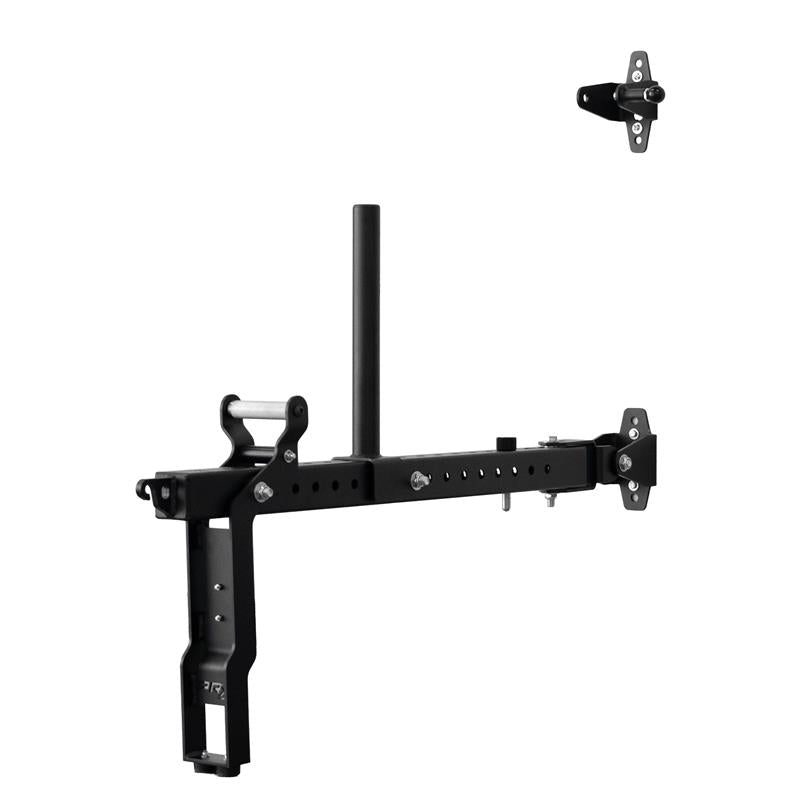
Bells of Steel’s Hydra version showed as sold out on September 28, 2026. The Bulletproof VBS ships with its own wall upright, and Bulletproof answers the rack question with “Technically, yes.”
Bells of Steel belt squat: rack attachment or freestanding machine
Bells of Steel sells the Belt Squat / Lever Arms Rack Attachment, lever arms that attach to your power rack with a belt squat belt, and the freestanding Belt Squat Machine, listed as the Belt Squat Machine 2.0 under what is included.
Rack attachment. Two rack types: 2.3 in x 2.3 in uprights with 5/8 in holes, and Hydra (3 in x 3 in, 5/8 in holes). Bells of Steel says to choose the version that corresponds with your power rack measurements, so measure before ordering. It includes 2 lever arms, 2 closed lever arm handles, 2 plate pegs and a belt squat belt, all usable as standalone pieces of equipment. The spec table lists a 40.3 in length, 1.9 in sleeve diameter, 9 in loadable length, powder coat and limited lifetime warranty. Check Hydra availability on the page.
| Belt Squat Machine | What Bells of Steel publishes |
|---|---|
| Capacity | 700 lb (317.5 kg) |
| Size | 51 in x 81 in footprint, or 51 in x 52.5 in with the weight pegs vertical; 40 in high; 264 lb |
| Build | 11-gauge steel, powder coat; 40 lb empty weight; 13.5 in loadable pegs; 13 adjustable heights; commercial-grade Zerk bearings and band pegs |
| Included | Machine, belt squat belt, belt chain, 2 carabiners, 2 J-cups |
| Shipping, warranty | 4 boxes, heaviest 139 lb; limited lifetime |
Depth. Bells of Steel says the machine is not guaranteed to allow all lifters to squat to full depth. If you bottom out early, it suggests standing on stackable pull blocks or bumper plates, or placing the machine on a DIY platform.
Exercises named. Machine: squats, calf raises, marches, lunges, RDLs and rows, plus curls with an added cable attachment. Rack attachment: belt squats, rows, high pulls, presses and Romanian deadlifts.
Belt and prices. The Belt Squat Belt, rated at 700 lb, comes with both options and is sold separately. On November 24, 2026, Bells of Steel showed Black Friday prices until November 29: $999.99 for the machine (against $1,199.99), $259.99 for the 2.3 in x 2.3 in attachment (against $329.99) and $62.99 for the belt. Confirm prices on its pages. For other freestanding machines, see how to choose a belt squat machine.
From Bells of Steel’s product pages, checked November 24, 2026. Not based on hands-on testing, and not a rating.
Does a lever arm or a vertical pull change your setup?
Once an attachment fits, its design decides how you set it up each session. A lever arm swings on a pivot, and Fringe’s mounting guide puts that pivot at or slightly below your hip height, with the lever running nearly horizontal at the start of the rep. The hole you pin into therefore depends on your height, so confirm your uprights have holes near your hip line.
Vertical designs keep the load moving straight down under your hips. Titan and Rogue build that path into a platform unit, and the VBS does it on a folding arm. REP’s cable version runs at a 1:1 ratio, so the plates on your pulldown count pound for pound.
How each style trains your legs is a separate question, and the squat machine styles comparison covers what arcs and vertical paths change in the lift. If you are still choosing between a hip belt and a dedicated machine, the squat harness vs belt squat comparison comes first.
Do you need to bolt your rack down for a belt squat attachment?
Design also shapes how the load pulls on your rack, and only three makers address stability at all. Rogue requires the drop-in to be bolted to the floor before use. Bulletproof recommends bolting down or securely weighing down the rack to reduce the risk of tipping when the VBS goes on an existing upright.
Fringe pitches rack mounting as ideal if you already have a sturdy, bolted rack. The rest of the table publishes nothing about anchoring, so treat stability on those as unconfirmed. A loaded lever arm puts plate weight out past the uprights, so ask the maker how to anchor a freestanding rack before you load it heavy.
How much floor space in front of the rack do you need?
Anchoring is one limit your garage sets, and reach is the other. No maker in the table publishes a clear-floor figure for training.
For lever arms, arm length is the number that tracks floor use, because the arm reaches out from the upright toward you. As a planning rule of thumb that no maker has tested, keep the full arm length clear in front of the upright, plus room for your stance and the plates.
Vertical units trade reach for a fixed footprint. Titan’s platform rolls on rear wheels, so it can come off the rack between sessions. Bulletproof gives depth for its wall upright only, so measure your own layout before a rack install.
Frequently asked questions
Will a belt squat attachment fit any power rack?
No. A rack mounted belt squat attachment has to match your upright size and hole diameter. Several universal arms accept 5/8 or 1 inch holes on 3×3 uprights and some also fit 2×2 or 2×3, while the vertical units from Rogue and Titan and the cable version from REP fit only their makers’ own racks. A match on published upright and hole sizes is not a guarantee for every rack of that size.
Do you need to bolt anything down for a belt squat attachment?
It depends on the attachment. Rogue requires its drop-in to be bolted to the floor before use. Bulletproof recommends bolting down or securely weighing down the rack when the VBS goes on an existing upright. Fringe pitches rack mounting as ideal if you already have a sturdy, bolted rack. The other makers in the table publish nothing about anchoring, so treat stability on those as unconfirmed. Ask the maker how to anchor a freestanding rack before you load it heavy.
How much floor space does a belt squat attachment need?
No maker in the table publishes a clear-floor figure for training. For lever arms, a planning rule of thumb that no maker has tested is to keep the full arm length clear in front of the upright, plus room for your stance and the plates. Vertical units trade reach for a fixed footprint.
Which rack mounted belt squat should you buy?
Your rack narrows this choice before anything else does. Find the line that matches what you own.
- Rogue Monster Series or Fortis rack with space behind it: the drop-in Rhino is built for it if you can bolt it to the floor. Rogue publishes no capacity, so ask before planning very heavy loads.
- Titan X-3, TITAN Series or T-3: the rack-mounted SquatMax-MD is the only unit here with published belt and pin ratings.
- REP PR-4000 or PR-5000 V2: the REP attachment makes sense if you already own the Lat Pulldown and Low Row or the Ares. Without one, count those parts before you commit.
- Sorinex rack with Jammer Arms: the JˣSquat adds belt squats to arms you own.
- Any other 2×2 or 2×3 rack: the Fringe Mammoth covers both hole sizes and publishes the highest capacity of the pin-in arms.
- Any other 3×3 rack: you have the widest choice. Pick a lever arm with a published capacity, or the VBS if you want a vertical path and can bolt down or weigh down the rack.
Before you order, run your uprights through the Rack Attachment Fit Checker to confirm your upright size and hole diameter against the attachment you picked. If your rack is not on a maker’s compatibility list, send that maker your upright size and hole diameter before you buy.
Sources checked September 28, 2026. Manufacturers change specs; confirm on the product page before ordering.
Related guides: Rogue Rhino belt squat: Drop-In vs Stand Alone, specs and rack fit, REP Ares 2.0: rack fit, specs and exercises and Belt squat machines: how to choose one for a home gym