
Disclosure: this guide contains affiliate links, and Hypertrophy Protocol may earn a commission at no extra cost to you.
A garage is the most common home for a power rack, and it is also the room most likely to fight one. The ceiling is often lower than it looks once the door is open, the floor is sloped on purpose, the slab may be thinner than your anchors, and the air can be damp or salty. Pick the rack after you check those four things, not before.
Here is how to match a power rack to your garage, with the rack specs pulled from our ceiling clearance guide and folding rack guide, where each one is sourced.
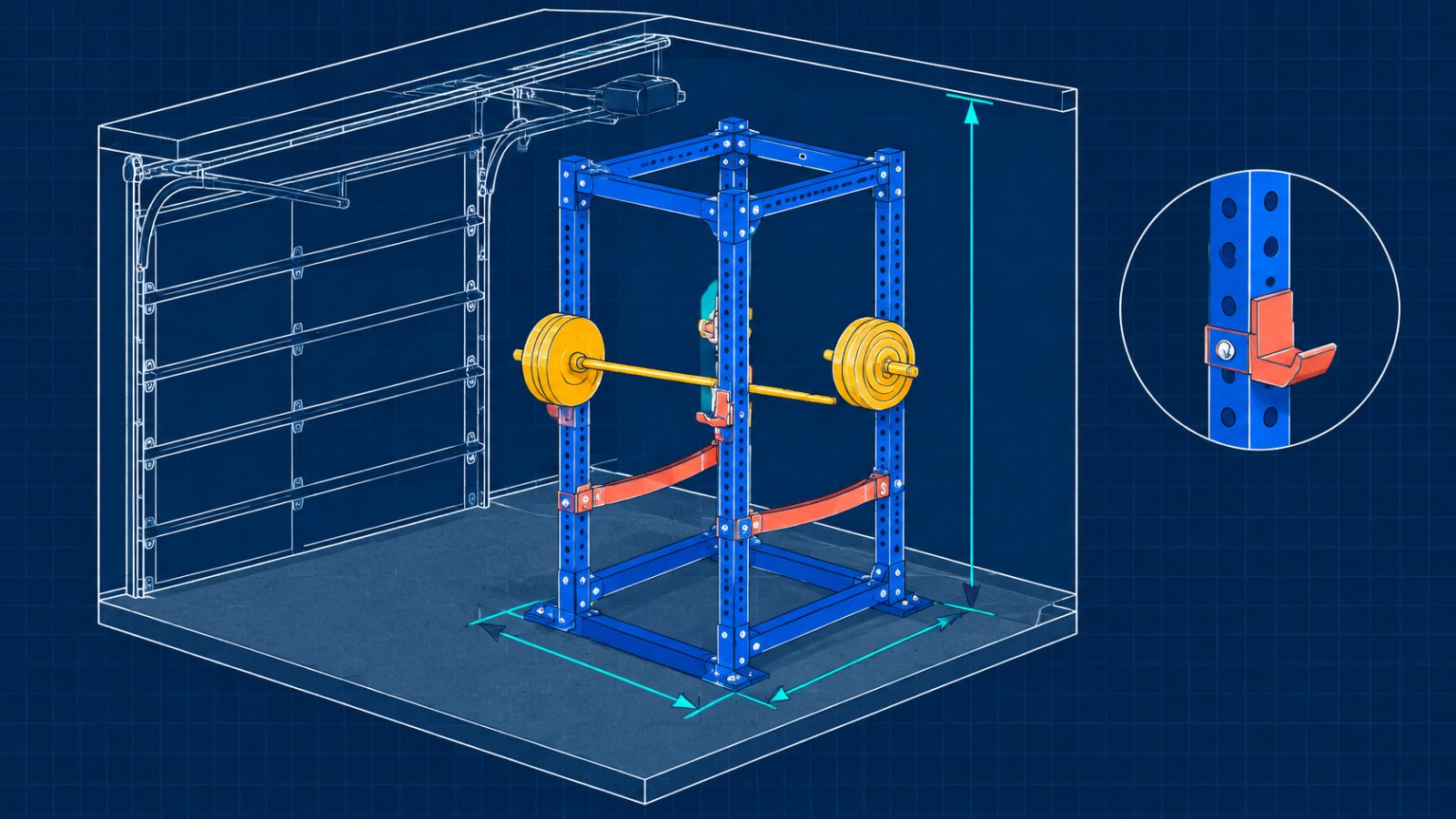
Which power rack fits which garage?
| Your garage | Rack type to look at | Examples from our guides |
|---|---|---|
| About 8 ft ceiling, you can drill the slab | A short bolt-down four-post rack, 80 to 84 in tall | Rogue RML-390C 3.0 at 80.375 in; REP PR-4000 or PR-5000 at 80 in; Bells of Steel Manticore at 84 in |
| You can’t or don’t want to drill | A flat-foot rack, or one the maker sells as stable without bolting | REP PR-4000, which REP pitches at 41 in deep to lifters who prefer not to bolt; Rogue RML-390F Flat Foot at 92.25 in (check your ceiling) |
| A car still parks in the bay | A folding wall-mounted rack | Rogue RML-3W, 90.4 in tall, folds to under 5 in from the wall, mounts to four wood studs |
| Coastal or damp garage | Any of the above, plus humidity control | See the rust section below |
Short racks cluster between 80 and 84 inches and tall versions between 90 and 93, so in most garages the short version is the safe first pick. Compare full specs side by side in the Power Rack Comparison Tool, or start from price with power racks under $500.
1. Measure the ceiling where the door opens, not where the drywall is
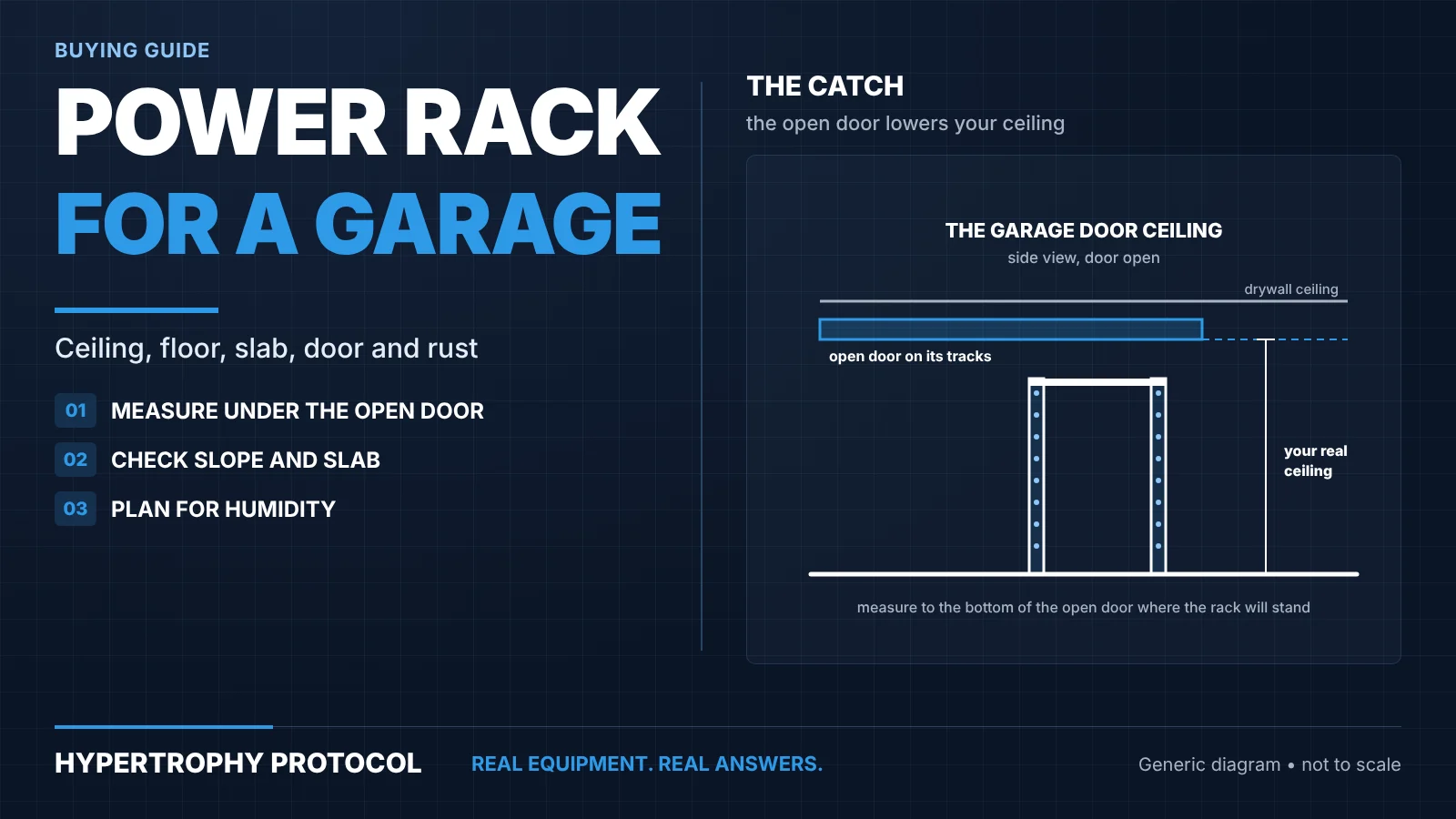
An open garage door lives in the space just under the ceiling. Garage door makers ask for about 12 inches of headroom above the opening for a standard-radius track (Clopay), and Garaga adds 2 inches when there is an electric opener (Garaga). When the door is up, the panels ride along horizontal tracks that run back into the garage.
So anywhere under those tracks, your real ceiling is the bottom of the open door, not the drywall above it. Open the door, then measure from the floor to the lowest point of the door, track or opener where the rack will stand. That number, not the room height, is what the rack and your pull-ups have to clear. The ceiling clearance guide walks through rack height, pull-up headroom and overhead pressing once you have it.
2. Check the floor slope before you anchor
Garage floors are sloped on purpose. The International Residential Code requires the parking area to slope so liquids move toward a drain or the vehicle door (IRC R309.1). That is good for spills and awkward for a rack, because a frame bolted to a sloped floor sits slightly out of plumb.
Lay a 4-foot level on the floor where the rack will go, front to back and side to side. If the bubble is off, ask your rack maker how they want the rack leveled before you drill. Don’t stack washers or shims under bolted feet unless the maker approves it, because the anchor then holds the rack through whatever you stacked.
3. Know your slab before you drill
The code minimum for a residential concrete slab on the ground is 3.5 inches (IRC R506.1). Rogue’s R-3 instructions call for 3/8 by 3.5 inch wedge anchors, which on a minimum-thickness slab is the full depth of the concrete. Check your anchor maker’s minimum concrete thickness and edge distance, keep anchors out of cracks and control joints, and ask your rack maker which anchor they approve.
Some houses sit on a post-tensioned slab, which has steel tendons under high tension inside the concrete. The Post-Tensioning Institute describes these slabs as a common choice for homes on shrink-swell soils. Many carry a stamped warning in the garage such as “post-tensioned slab, do not cut or drill.” If you see one, or you aren’t sure, don’t drill until a professional has located the tendons; a flat-foot or folding rack avoids the question.
Mats change the anchor math too. A 3/4-inch stall mat under the feet takes 3/4 inch of embedment away from the anchor, which is why Rogue recommends cutting flooring out under the feet. The flooring under a power rack guide covers mats, platforms and anchors in detail.
4. Plan for humidity and rust
Garages run damp. Clean steel corrodes very slowly below roughly 60% relative humidity, but salt and grime on the surface lower that threshold, so keeping the room at or below about 50% is a sensible target, especially near the coast. A cheap hygrometer such as the ThermoPro TP50 tells you where you stand before rust does.
Paint and powder coat protect a frame only where they are intact, so watch the spots that get chipped: pin holes, J-cup contact points and the feet. Our rust prevention guide covers finishes, dehumidifiers and a maintenance routine.
Buying a rack secondhand? Our used power rack buying guide shows how to tell surface rust from damage, along with eight other checks.
5. Decide whether the car stays
If a car still parks in the bay, a four-post rack usually loses. A folding wall rack such as the Rogue RML-3W folds to under 5 inches from the wall, but it mounts to four wood studs (Rogue sells an optional stringer pair), and you still need clear floor in front of it when it is open. The folding squat rack guide compares 12 of them, and the garage gym layout guide shows three layouts that work in a garage.
Before you order, sketch the bay in the Home Gym Room Planner with the door open and the car in place.
Garage power rack FAQ
What height power rack fits a garage?
For a typical 8-foot garage, an 80 to 84 inch rack is the safe pick. Under the open door it can be less, so measure to the bottom of the open door first.
Do I have to bolt a power rack to a garage floor?
It depends on the rack. Some makers require anchoring and some sell flat-foot or deep-base racks for lifters who don’t bolt. Follow your rack maker’s instructions, and don’t drill a post-tensioned slab without having the tendons located.
Can I put a power rack on rubber mats in a garage?
Yes. For a flat-foot rack, 3/4-inch stall mats are the usual choice. For a bolt-down rack, cut the mat out under the feet or use the longer anchor your rack maker approves.
How do I keep a garage power rack from rusting?
Keep the humidity at or below about 50%, wipe off sweat and chalk, and touch up chips in the paint or powder coat early.
Sources
- International Code Council: IRC R309.1, garage floor surface
- International Code Council: IRC R506.1, concrete floors on ground
- Clopay: garage door track options and headroom
- Garaga: headroom required above a residential garage door
- Post-Tensioning Institute: post-tensioned slab-on-ground
- Rack heights, depths and anchor specs: makers’ pages as cited in our ceiling clearance guide, folding rack guide and flooring guide